

Australian scientists have discovered a new native bee species with tiny devil-like horns — and given it a name to match its striking appearance.
The species, Megachile (Hackeriapis) lucifer, was found in the remote Bremer Ranges of Western Australia’s Goldfields region while researchers were surveying a critically endangered wildflower that grows only there. The find, now published in the Journal of Hymenoptera Research, marks the first new member of this bee group described in over two decades.
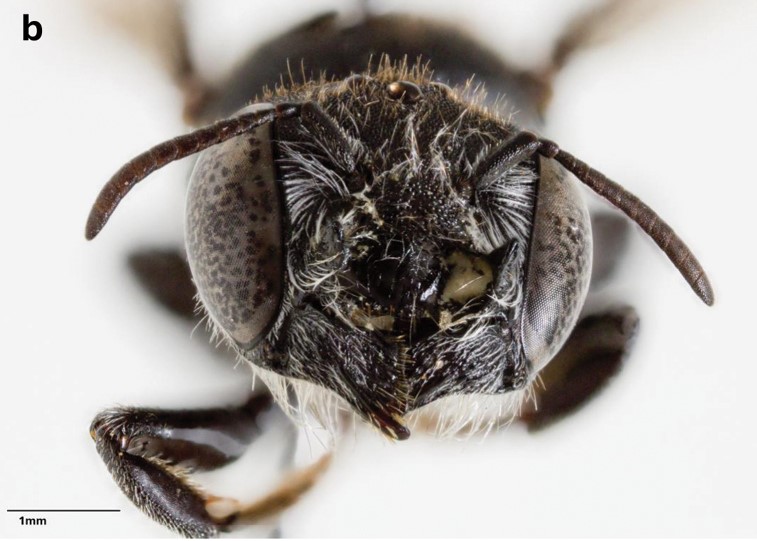
Dr. Kit Prendergast, from Curtin University, who led the study, said in a Curtin University media release that the female bee’s distinctive horned face immediately stood out.
Also Read: New Reptile Species Sakaerat Bent-Toed Gecko Found in Thailand’s Dense Forests
“The female had these incredible little horns on her face,” Dr Prendergast said. “When writing up the new species description, I was watching the Netflix show Lucifer at the time, and the name just fit perfectly. I’m also a huge fan of the character, so it was a no-brainer.”
The name Lucifer — Latin for “light-bringer” — also reflects the discovery’s goal of shedding light on the need for stronger conservation efforts for native bees and the plants they depend on.
DNA barcoding confirmed that the new specimens didn’t match any known bees in existing databases, nor did their appearance match museum samples. The female’s horns, each less than a millimeter long, are unique among related species. Researchers think they could be used for collecting pollen, gathering nesting materials like resin, or even for defense — though their exact purpose remains uncertain.
Dr Prendergast discovered M. lucifer while studying Marianthus aquilonarius, a rare and endangered wildflower that blooms in the same small area. The bee was also seen visiting a nearby mallee tree, suggesting it may rely on multiple local plants for food and nesting.
Because both the flower and the bee are confined to such a limited habitat, they face similar risks from climate change and land disturbance.
In the same Curtin University media release statement, Dr Prendergast warned:
“Many mining companies still do not survey for native bees, so we may be missing undescribed species, including those that play crucial roles in supporting threatened plants and ecosystems. Without knowing which native bees exist and what plants they depend on, we risk losing both before we even realise they’re there.”
Australia is home to about 2,000 native bee species, but hundreds remain unnamed and poorly studied. Dr. Prendergast emphasizes that the discovery highlights how much biodiversity remains undiscovered. — even in regions that have been explored for decades.
The discovery also coincides with Australian Pollinator Week, an annual celebration of the vital role bees and other insects play in sustaining ecosystems and food production.
So while Megachile lucifer may carry a devilish name, its discovery serves a far more angelic purpose: bringing light to the unseen world of Australia’s native pollinators.
Story Source: The discovery was published in Journal of Hymenoptera Research. Read the discovery here.