
The idea of autonomous machines that replicate themselves using raw materials from space sounds like science fiction. But they might offer a promising way to search for alien life in our Solar System.
In a new paper, Technosignatures of Self-Replicating Probes in the Solar System, aerospace engineer Alex Ellery argues that these so-called von Neumann or self-replicating probes could, in principle, already exist within our solar system — and that it’s time we start looking for them.
Also Read: Aliens Got “Bored” and Stopped Searching Humans, Says Scientist
Why Self-Replicating Probes Make Sense
The concept of self-replicating probes builds on mathematician John von Neumann’s 1949 idea of a “universal constructor” — a theoretical machine capable of creating anything, including exact copies of itself, from available resources.
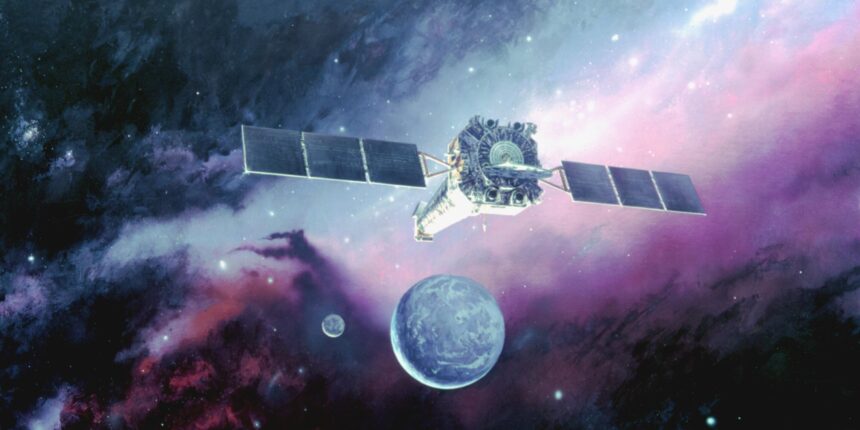
Applied to space exploration, this idea leads to autonomous spacecraft, or von Neumann probes, that could replicate, gather resources, and spread through the solar system or even the galaxy without direct human control.
For any civilization seeking to explore the galaxy, launching spacecraft one by one would be prohibitively expensive and slow. A self-replicating probe, however, could use local resources from asteroids or moons to create copies of itself. Each copy could then travel further, mine additional resources, and build new replicas — gradually spreading through space. This strategy drastically reduces cost and time, making interstellar exploration feasible over millions of years.
While the concept has been discussed for decades, Ellery’s paper argues it deserves renewed attention, particularly because such probes, if they exist, might leave identifiable technosignatures.
Possible Signs and Locations
If any self-replicating probes reached our solar system, they would have targeted resource-rich environments. The Moon, asteroids, and possibly Kuiper Belt objects are key candidates.
Ellery suggests several indicators that could hint at their presence:
- Mining activity: Unexplained excavation patterns or material removal on asteroids or moons.
- Isotopic anomalies: Unusual ratios of isotopes like ²³²Th/¹⁴⁴Nd and ²³²Th/¹³⁷Ba, potentially left behind by nuclear reactors used in probe manufacturing.
- Buried artefacts: Metallic or composite objects embedded in regolith, inconsistent with natural processes.
- Magnetic or chemical signatures: Localized disturbances in magnetic fields or chemical compositions that do not match known geological activity.
These would represent “technosignatures” — observable traces of technology rather than biology.
Also Read: Mars Ice Could Preserve Traces of Ancient Life, Study Suggests
A New Direction for SETI
Traditional SETI (Search for extraterrestrial intelligence) searches focus on radio signals or megastructures such as Dyson spheres. Ellery proposes widening that scope. Instead of waiting for a distant transmission, we could examine our own backyard for subtle artefacts or energy patterns.
If probes have ever passed through the solar system, they might have left behind inactive machines, mining residues, or isotope patterns detectable with current or near-future instruments.
Such a search could align naturally with upcoming lunar missions and asteroid exploration programs, allowing scientists to integrate technosignature detection into planned operations.
Challenges and Caution
The idea remains speculative. No evidence currently supports the existence of alien probes, and the signatures described could easily be explained by natural processes.
Distinguishing an artificial isotope anomaly from a geological one is complex. Even if probes once existed, billions of years of impacts and erosion may have erased or buried most signs.
Still, the hypothesis offers a structured framework — a way to think systematically about how advanced exploration technology might manifest in our solar system.
Looking Ahead
Ellery’s proposal reframes the search for extraterrestrial intelligence as a local effort. Instead of scanning distant stars, researchers could analyze the Moon’s isotopic record, survey asteroid surfaces, and monitor for non-natural metallic signatures.
It also connects naturally with humanity’s own expansion into space. As lunar mining and asteroid exploration advance, every new mission becomes a potential opportunity to investigate these questions empirically.
Even if no probes are found, searching for their possible traces may refine how we recognize artificial activity — a valuable outcome in itself. And if any evidence ever does appear, it would reshape the understanding of life and technology in the universe more profoundly than any radio signal could.
Story Source: Alex Ellery, “Technosignatures of Self-Replicating Probes in the Solar System,” arXiv, 2025. Read the paper here.