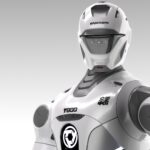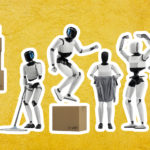

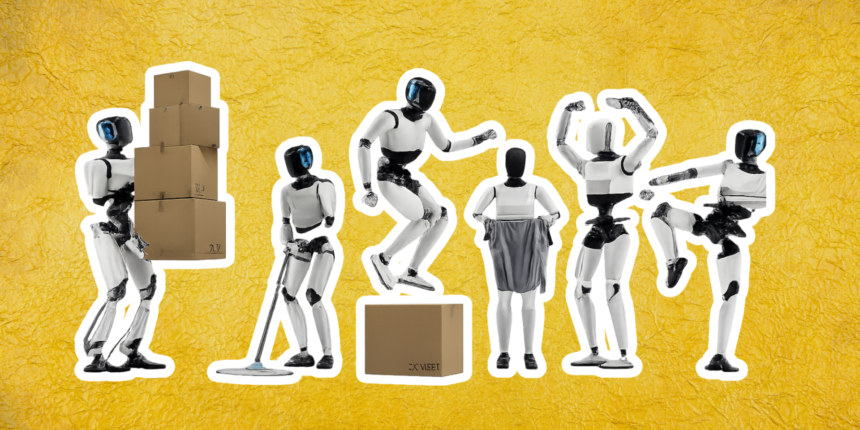
Humanoid robots are starting to show up less as isolated lab experiments and more as complete systems being shaped for real use. Over the past few years, the field has moved beyond single tricks or carefully staged demos, toward robots that can walk, handle objects, interact with people, and keep operating outside tightly controlled settings.
The humanoids expected to appear or mature around 2026 represent some of the most advanced platforms in development right now. Rather than focusing on spectacle, these robots are being built around broader capabilities such as autonomy, adaptability, and long-term operation in human environments. Some aim to become general-purpose helpers, others are designed for homes or industrial settings, and a few are still clearly pushing the limits of movement and learning.
Below is a look at several of the most advanced humanoid robots expected to emerge around 2026.
Also Read: World’s Smallest Autonomous Robot That Can Sense, Think, and Act
Tesla Optimus Gen 3 (Tesla Bot)
Tesla’s Optimus is intended as a general-purpose helper. It uses Tesla’s custom AI chips and Full Self-Driving vision system to navigate and manipulate objects.
Optimus Gen 3 is expected to be unveiled in 2026, with Tesla’s focus appearing to be on scaled manufacturing – implying simpler, mass-producible hardware – and on “pixels-to-action” AI that would let Optimus learn from demonstrations. This suggests that key advances may include large-scale vision-language-action learning and a design optimized for manufacturability.
Elon Musk has even stated an ambitious goal of flying an Optimus on a SpaceX Starship mission to Mars in late 2026. While this is a long-term vision, it highlights the emphasis on autonomy and robust operation in unstructured settings. So far, Tesla has shown Optimus prototypes that can walk and perform simple tasks, though full autonomy remains a major challenge.
Also Read: EngineAI T800: Humanoid Robot Performs Incredible Martial Arts Moves
Boston Dynamics Atlas (Next Generation)
Boston Dynamics’ Atlas is a high-mobility humanoid known for dynamic locomotion (running, jumping, backflips). Under Hyundai’s ownership, a new version of Atlas will be publicly unveiled at CES 2026.
Boston Dynamics has not released full specs yet, but earlier Atlas demonstrations focused primarily on dynamic tasks like parkour and box rearranging. This suggests that the new design could feature upgraded motion planning and perception, along with stronger actuators and improved balance, while continuing to emphasize legged agility and whole-body control.
LG CLOiD (home assistant, LG)
LG’s CLOiD is designed as a household assistant rather than a lab robot. Built for everyday indoor use, it is meant to help with common home tasks such as cleaning, tidying, and responding to voice requests. LG positions CLOiD as a robot that can move through living spaces safely and interact with people in a natural, non-intrusive way.
To do this, CLOiD relies on onboard intelligence and a set of sensors that allow it to understand its surroundings, recognize voices, and respond appropriately. LG has emphasized safety and approachability in the design, using soft materials and a human-friendly appearance suited for close interaction.
CLOiD’s AI is centered on LG’s Affectionate Intelligence technology, which focuses on adapting to user habits and preferences over time rather than simply executing fixed commands. The robot is expected to be publicly unveiled at CES 2026, where LG plans to demonstrate how it can assist with routine household activities in a more personalized and practical way.
Figure 03 (Figure AI)
Figure 03, developed by Figure AI, is a humanoid robot intended for both home and workplace settings. Introduced in late 2025, it is built around the company’s Helix AI system, which is designed to help the robot see its environment, understand instructions, and act on them in a coordinated way. The goal is to allow Figure 03 to handle everyday tasks with smoother and more reliable movement than earlier systems.
The robot has been designed with close human interaction in mind, emphasizing safety, ease of use, and practical operation in real-world spaces. Features such as a lighter build, soft exterior materials, and the ability to recharge autonomously reflect a focus on long-term, routine use rather than short demonstrations.
Figure AI has also highlighted manufacturability as a core part of the design, with plans to produce the robot at larger scale. After opening production preorders in 2025, the company expects pilot deployments in homes and workplaces during 2026, alongside software updates that expand what the robot can learn and do over time.
1X NEO (1X Technologies)
1X’s NEO is presented as a humanoid robot designed specifically for use in the home. Introduced in late 2025, it is intended to move and interact in a way that feels natural and safe around people, with a soft exterior and smooth, human-like motion suited to everyday indoor environments.
NEO is built around an AI system that allows it to communicate, recognize objects and voices, and remember past interactions. The idea is for the robot to handle simple household routines, respond to questions, and gradually learn and develop new skills through regular use.
1X has positioned NEO as one of its first consumer-oriented humanoids, with early units expected to reach customers in 2026. The company is offering the robot through both direct purchase and leasing options, signaling a push toward making humanoid assistants more practical and accessible for everyday home use.
Also Read: Paralysed Man Controls Robots With China’s Brain-Computer Interface Technology
HMND 01 Alpha
Humanoid’s HMND 01 is a very recent robot with record-setting development speed, in Dec 2025 the company announced its bipedal Alpha prototype – built from initial design and able to walk in only 48 hours after final assembly. This was achieved by training enormous locomotion datasets in simulation; using NVIDIA’s Isaac Sim, they ran the equivalent of 19 months of reinforcement learning in just two days. The result is a robot that can walk, squat, hop, and recover from pushes robustly.
HMND 01 Alpha stands 1.79 m (5’10’’) tall with 29 body DOF (degrees of freedom), 15 kg bimanual payload, and a dense sensor suite. It is powered by NVIDIA Jetson Orin and Intel processors and its swappable batteries provide three hours of power during testing and development.
In the future, Humanoid plans further field tests. The wheeled Alpha platform has already tested successfully for industrial and logistics tasks, and the new bipedal Alpha will follow with demos in industrial and even home environments.
Also Read: Robot Learns 1,000 Tasks in a Single Day
The Future of Humanoid Robots in 2026
Taken together, these humanoid robots highlight how varied the field has become. There is no single path forward. Some systems are being optimized for homes, others for factories, and a few remain experimental platforms pushing the limits of balance, learning, and autonomy. What connects them is a shift toward building robots that can operate for longer periods, in more realistic settings, and with fewer constraints than earlier generations.
Of course, challenges remain. Achieving reliable autonomy, safe interaction with people, and practical large-scale deployment are all hurdles that we will continue to face in the coming years.
If 2026 is not going to be the year when robots become so common that they go unnoticed in daily life, it will surely mark the point when our metal companions begin joining our lives at a larger scale, even if only in limited ways.
Sources: Investing.com, IoT World Today, Hyundai, LG, Figure AI, 1X Technologies, The Humanoid