


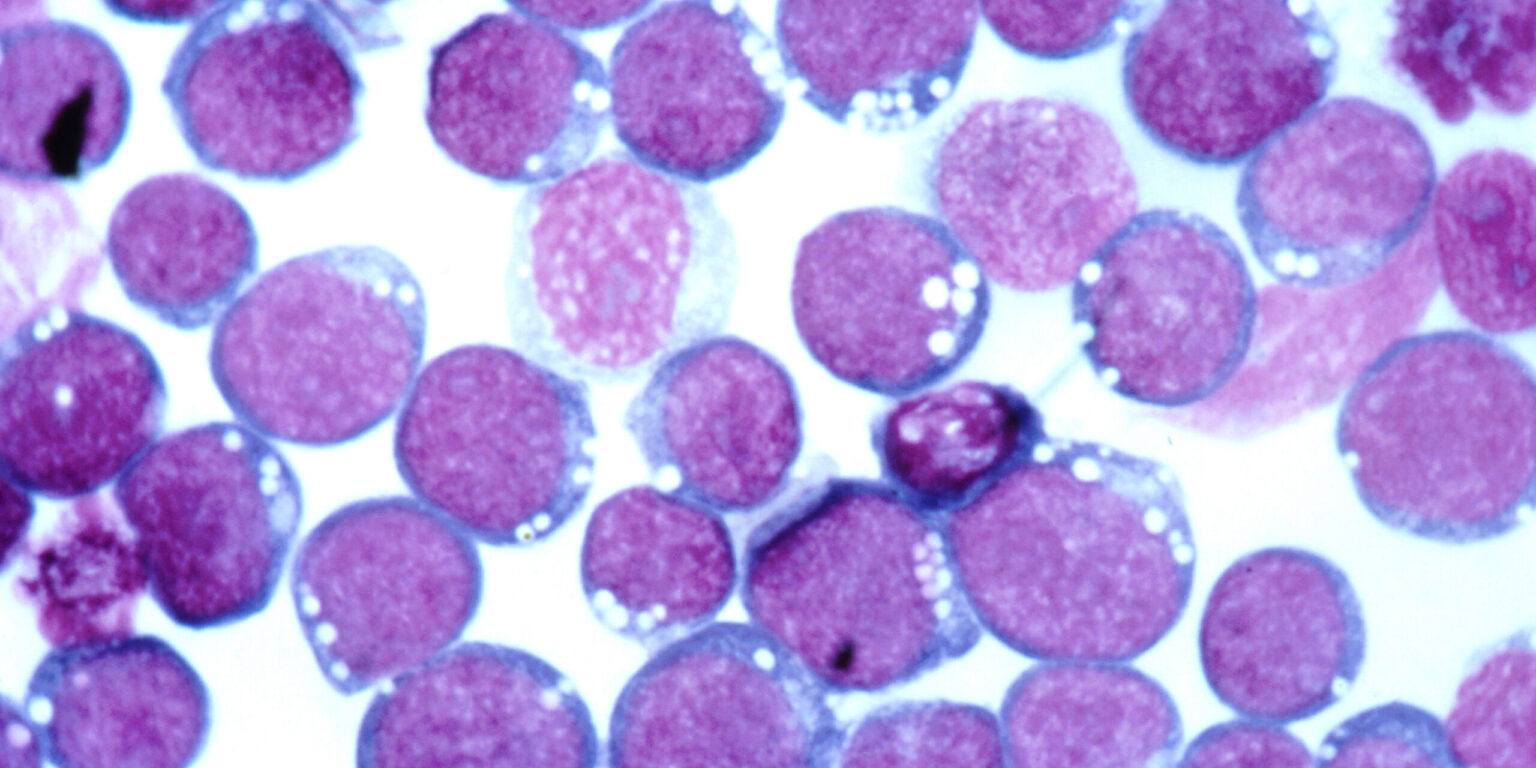
The link between mononucleosis and MS has become an important topic in medical research, especially as recent studies reveal how both conditions connect to a virus almost everyone carries.
Mononucleosis (mono) – often nicknamed “the kissing disease” – is an acute viral illness usually caused by Epstein-Barr virus (EBV). EBV is one of the most common human viruses; about 90% of adults carry antibodies indicating past infection.
In most children EBV causes no symptoms, but when teenagers or adults catch it they can develop fever, sore throat, swollen lymph nodes and fatigue lasting for weeks. After the illness EBV does not go away; it establishes a lifelong latent infection in certain immune cells. The CDC notes that EBV is “the most common cause of infectious mononucleosis, also called ‘mono’”.
Also Read: Why Some People Stay Healthy Despite Disease-Causing Genetic Mutations
In contrast, multiple sclerosis (MS) is a chronic autoimmune disease of the central nervous system. In MS, the immune system mistakenly attacks the myelin sheath – the fatty insulation around nerve fibers in the brain and spinal cord [↗]. This demyelination disrupts nerve signaling and leads to symptoms such as muscle weakness, numbness, vision problems and coordination difficulties. As the World Health Organization explains, MS occurs “when the immune system attacks the brain and spinal cord” [↗].
The cause of MS has long been unknown, though it is thought to involve genetic and environmental factors. Notably, Harvard researchers describe MS as a “chronic inflammatory disease of the central nervous system” with an unknown cause, where EBV has been “one of the top suspects”.
The Link Between Mononucleosis and MS
For decades, scientists have observed a curious link between EBV (and mono) and MS. People who had a documented case of infectious mononucleosis are at noticeably higher risk of developing MS later on. In fact, epidemiological studies have shown that a history of mono roughly doubles the risk of MS compared to those without mono. But because EBV infects the vast majority of the population, it was hard to prove that EBV actually causes MS rather than simply being very common.
This changed with a landmark Harvard study published in Science in 2022. The researchers analyzed health data from over 10 million U.S. military personnel. Among those, 955 were diagnosed with MS during active duty. Using stored blood samples taken every two years, the team could see who became EBV-positive and when.
They found that the risk of MS jumped dramatically – about 32-fold – after EBV infection, whereas infection with other common viruses had no effect [↗]. In other words, MS almost never occurred in this group until after people caught EBV. Only after EBV infection did levels of a neural injury biomarker (neurofilament light chain) rise, consistent with early nerve damage in MS.
The researchers concluded that EBV infection is likely the “leading cause” of MS, since no other known risk factors could explain the findings [↗].
How exactly might EBV trigger MS? One important clue comes from a study of immune cells in MS patients. Stanford scientists found that a protein from EBV (called EBNA1) closely resembles a human protein in nerve tissue (the glial cell adhesion molecule, or GlialCAM). In effect, part of the EBV virus “mimics” a protein in the brain. They showed that antibodies produced in MS patients bind to both EBNA1 and GlialCAM.
As William Robinson, MD, PhD, professor of immunology and rheumatology at Stanford, explained, “part of the EBV protein mimics your own host protein… in the insulating sheath on nerves. This means that when the immune system attacks EBV, it also ends up targeting [the similar] protein in the myelin”. This kind of “molecular mimicry” could lead immune cells primed by EBV to cross-react with myelin in the central nervous system, launching the autoimmune attack seen in MS.
Also Read: Your Brain Changes at 9, 32, 66, and 83, Scientists Find
The implications of these findings are profound. If EBV infection is indeed the root trigger for most MS cases, then preventing or controlling EBV could prevent MS. As Harvard’s Alberto Ascherio notes, currently there is no vaccine or cure for EBV, but in principle an EBV vaccine or antiviral therapy “could ultimately prevent or cure MS”.
In fact, these results have galvanized efforts to develop an EBV vaccine – a vaccine that might not only stop mono and EBV-linked cancers, but potentially halt MS before it starts [↗].
At the same time, researchers caution that MS is likely multifactorial. EBV infection alone is not sufficient to cause MS in every person (most people with EBV never get MS), so genetics and other environmental factors must also play a role. Still, the Harvard study provides the strongest evidence yet that EBV infection is the key missing link in MS etiology.
In summary, mononucleosis and MS are connected by a common culprit: Epstein-Barr virus. EBV causes mono and now appears to be a primary trigger for the chronic autoimmune damage of MS. This connection is changing how scientists think about preventing and treating MS going forward.
Sources: CDC, WHO, Harvard T.H. Chan, PubMed, Stanford Medicine, NLM