


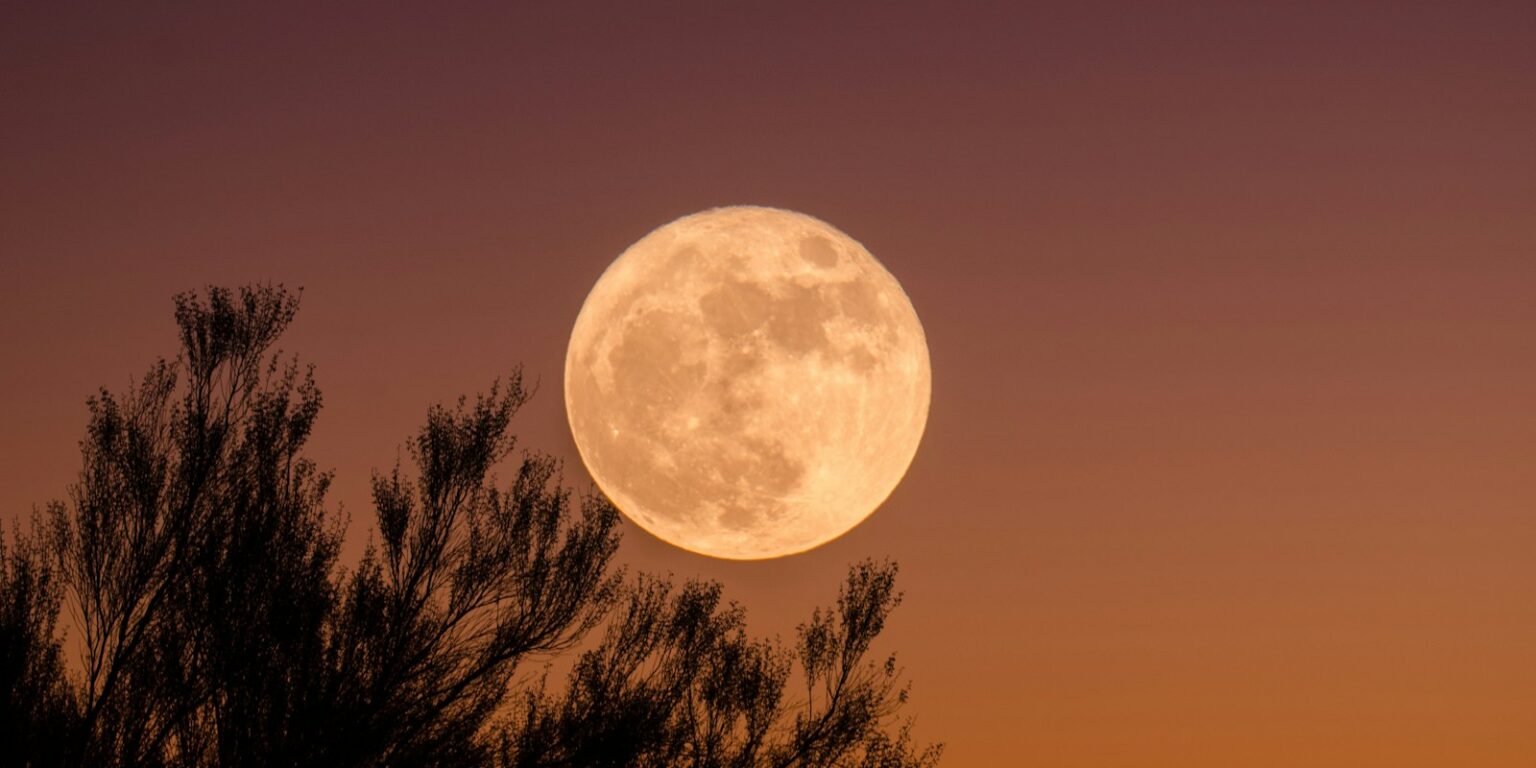
Sky-watchers are in for a treat tonight. The November full moon, known as the Beaver Moon, will appear larger and brighter than usual, making it the biggest supermoon since 2019.
A supermoon occurs when the Moon reaches its perigee, the closest point to Earth in its orbit, at the same time it’s full. This makes it look about 14 percent bigger and 30 percent brighter than when it’s farthest away.
This particular event is special because the Moon will be just around 356,980 kilometers from Earth — a noticeably close approach that won’t be matched again this year. Astronomers say this will be the final and brightest supermoon of 2025.
When and how to see it
The full moon reaches its exact phase early on Wednesday, November 5, but the best time to watch is soon after sunset on Tuesday or Wednesday evening, when the Moon is near the horizon. That’s when it appears especially dramatic — a visual trick called the “moon illusion,” which makes it seem larger near the horizon than high in the sky.

In India, moonrise will happen around 6:30–6:50 p.m. (IST), depending on location. Observers are advised to find a clear eastern horizon — away from city lights — to fully appreciate its glow.
Viewers in other regions will have similar opportunities: in the United States, the supermoon is expected to peak in brightness around 8:10 a.m. ET. Obviously, the sun will be above the horizon by then, so Tuesday night offers the best viewing opportunity.
In Australia, SBS News notes that the phenomenon of the Beaver supermoon will light up the sky from Wednesday evening into early Thursday morning, giving stargazers the best chance to catch it just after sunset when it appears largest and brightest.
Why it’s called the Beaver Moon
The name “Beaver Moon” dates back to old North American and European traditions. November was the season when beavers prepared for winter — or when trappers would set their final catches before the rivers froze. The name has stuck, part of a series of traditional full-moon titles tied to seasonal changes: Harvest Moon, Wolf Moon, Strawberry Moon, and so on.
What makes this one special
We’ve had several supermoons this year, but this one shines brightest. Because the Moon’s orbit is slightly elliptical, these moments of perigee don’t happen evenly — sometimes giving us one especially close, bright sight every few years.
For those hoping to capture it, no telescope is needed. Even a smartphone camera can record some impressive shots — especially if framed against trees, buildings, or mountains near the horizon. The brightness may wash out dim stars, but it’s perfect for enjoying the clear, silvery night sky.