


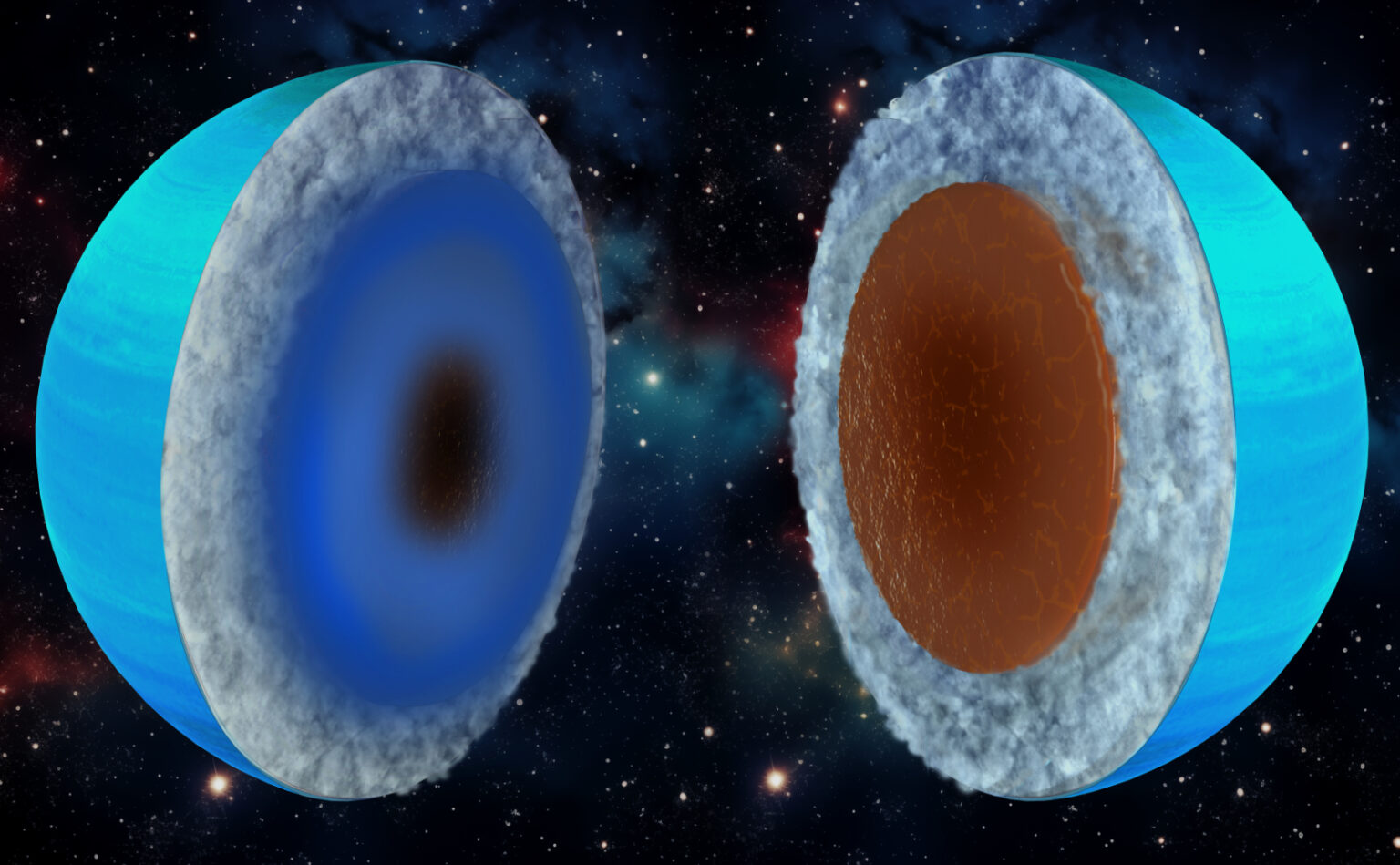
Uranus and Neptune have lived in an awkward category for decades, not quite like gas giants Jupiter and Saturn, not quite like the rocky worlds closer to the Sun. We call them ice giants, mostly because their interiors were thought to be dominated by frozen water, methane, and ammonia under immense pressure. But a new study suggests that the label may be doing more harm than good.
Researchers from the University of Zurich and the NCCR PlanetS have taken a fresh look at what might be hiding inside the Solar System’s two most distant planets. Their findings, published in Astronomy & Astrophysics, point to a surprising possibility that Uranus and Neptune may be far more rocky than icy.
This does not mean scientists have suddenly “reclassified” the planets. Instead, the study questions whether the traditional ice-rich model is the only way to explain their interiors. As lead author Luca Morf explains, the issue lies in how little is actually known about these planets: “The ice giant classification is oversimplified, as Uranus and Neptune are still poorly understood.” In other words, rock-dominated interiors are not ruled out by the data; they fit it just as well.
Also Read: Bermuda’s Biggest Mystery Isn’t the Triangle — It’s a Giant Rock Layer Below
The team, led by Morf with planetary scientist Ravit Helled, approached the problem differently from earlier models. Previous attempts often leaned too heavily in one direction, either forcing strong physical assumptions or oversimplifying the observational data. As Morf explained in a UZH press release, “Models based on physics were too assumption-heavy, while empirical models are too simplistic. We combined both approaches to get interior models that are both ‘agnostic’ or unbiased and yet are physically consistent.”
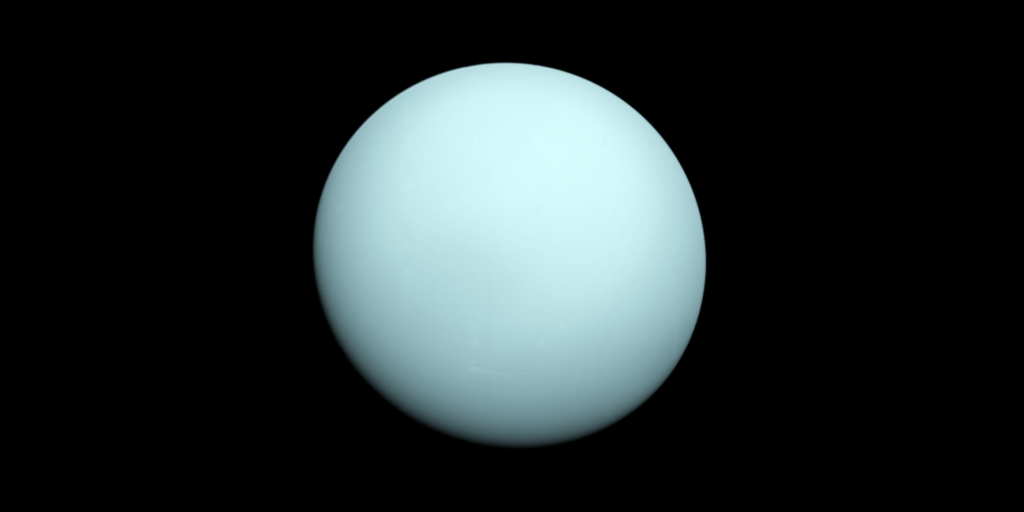
They started with random density profiles for the planets’ interiors, calculated the gravitational fields those interiors would produce, and then compared the results with actual observations of Uranus and Neptune. The process was repeated many times to find models that matched the data without forcing a preconceived internal structure.
"wait, that's real?"
What emerged was not a single neat answer, but a wider range of possibilities than scientists usually allow. Rather than being locked into water-rich “ice” layers, the interiors could plausibly contain large amounts of rock, similar in spirit to what we see in Pluto, which turned out to be roughly 70 percent rock by mass.
That means an ice-dominated interior is just one option among several, not the only explanation.
This broader view also helps with another long-standing mystery: the strange magnetic fields of Uranus and Neptune. Unlike Earth’s relatively simple north-south magnetic field, both planets have fields with more than two poles that are tilted, offset, and oddly shaped. The new models naturally produce layers of so-called ionic water, electrically conductive fluids that can generate magnetic fields away from the planetary center. “These layers generate magnetic dynamos in locations that explain the observed non-dipolar magnetic fields,” Helled explained. The models also suggest that Uranus’s magnetic field originates deeper inside the planet than Neptune’s.
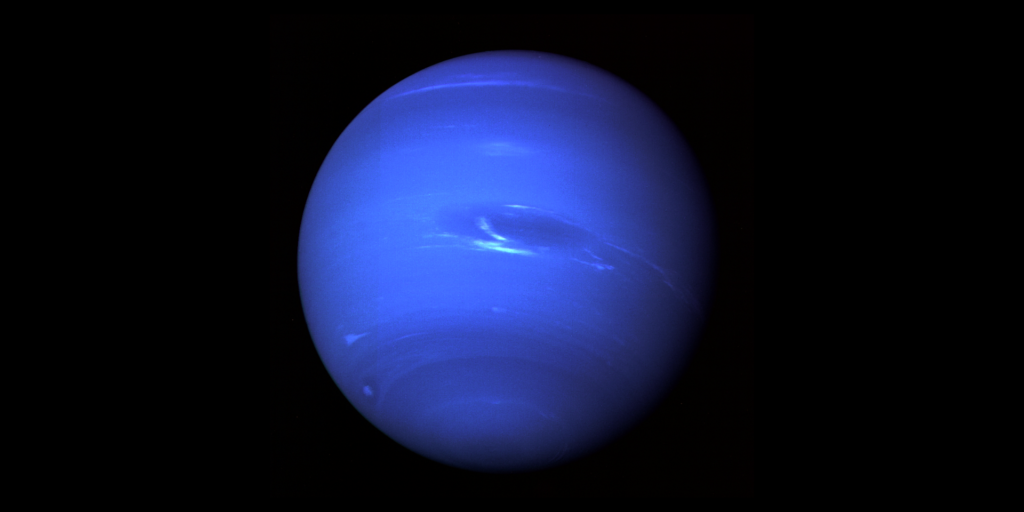
There are still big unknowns. “One of the main issues is that physicists still barely understand how materials behave under the exotic conditions of pressure and temperature found at the heart of a planet,” Morf says, so that uncertainty affects every interior model. The authors stress that current data cannot tell us whether Uranus and Neptune are truly rock-rich or ice-rich. Both remain possible.
Also Read: Humans Have Tilted the Earth 31.5 Inches Since 1993, Study Finds
What the study really does is loosen the box these planets have been placed in for decades. The familiar three-tier system of rocky planets, gas giants, and ice giants may be too tidy for a Solar System that keeps surprising us. Helled summed up the uncertainty plainly: “Both Uranus and Neptune could be rock giants or ice giants, depending on the model assumptions.”
To move beyond educated guesses, the researchers argue, we will need dedicated missions to Uranus and Neptune. Until then, the blue planets remain a reminder that even in our own cosmic neighborhood, some worlds are still largely unknown.
The study was published in Astronomy & Astrophysics.