


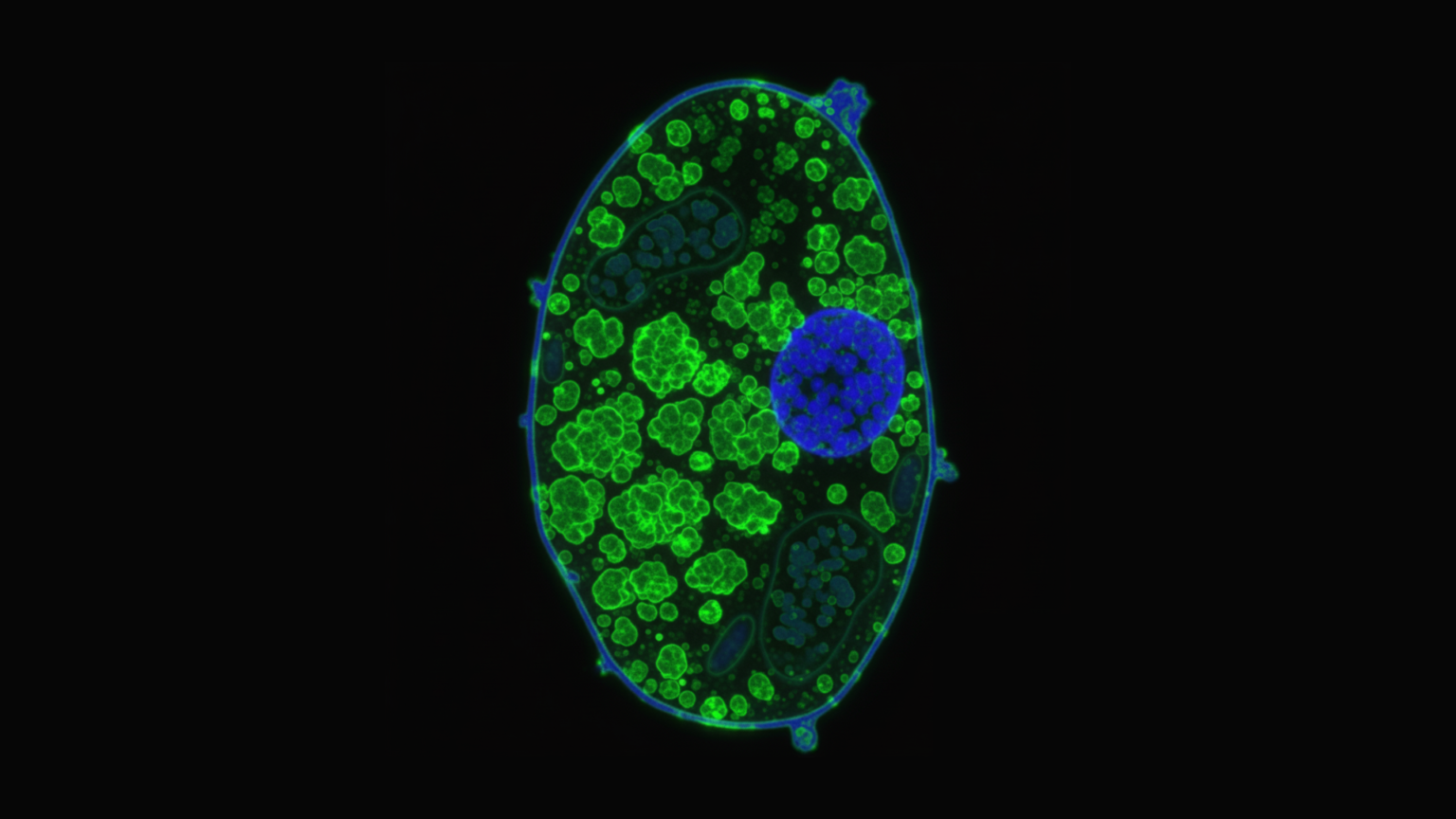
We usually think of cells as finely tuned machines, carefully balancing every part they make. There’s an old idea in biology that if a cell starts producing too much of any protein, it quickly gets overwhelmed.
The logic makes sense: proteins cost energy and materials to build, so flooding a cell with extra ones should drain resources and crash the system. For decades, scientists assumed there were strict limits on how much protein a cell could churn out before it collapsed.
But here’s where it gets interesting. A team of researchers working with yeast cells decided to test just how far that idea could be pushed.
Instead of focusing on toxic proteins, the kinds that clump up or interfere with life processes, they picked proteins that are basically harmless. Think of them as cellular placeholders, doing no damage on their own. Then they cranked up the volume, forcing the yeast to produce these proteins at extreme levels.
The result? Shockingly, the yeast survived.
Even more, some cells were making these neutral proteins until they accounted for nearly half of everything inside them, exceeding 40% of their total protein content.
Similar: Microbe That Could Turn Martian Dust into Oxygen
Imagine if half the workers in your city spent all their time building toy blocks no one needed, yet the city somehow kept running schools, hospitals, and power plants. That’s what the yeast were doing.
Of course, surviving doesn’t mean unchanged. When the cells poured resources into making so much unnecessary protein, they started showing signs of strain.
They acted like they were starved of nitrogen, an essential nutrient, even when food was available. In some cases, they shifted their metabolism away from fermentation and toward respiration, a more efficient way to squeeze energy from resources.
They cut down on making ribosomes, the machines needed to build new proteins. Their nucleolus (a hub where ribosomes are produced) showed visible disruptions.
It was as if the whole cell economy was restructuring to deal with the pointless workload.
Did you Know?
Yeast has been used by humans for over 9,000 years to make bread and beer!
To make sense of these effects, the researchers introduced something they call a neutrality index. This measure shows how tolerant a protein is to massive overproduction.
Some proteins, like broken versions of enzymes or harmless fluorescent markers, turned out to be highly neutral. The yeast could tolerate mountains of them with surprisingly little toxicity.
Others were less neutral, and even small surpluses caused trouble.
This gives biologists a new way to think about the hidden costs of protein expression: it’s not just about whether a protein is useful, but also about whether it can be tolerated in bulk.
Why should this matter outside a yeast lab? For one, yeast is a major workhorse in industry. It brews our beer, bakes our bread, and helps manufacture medicines like insulin.
Understanding how much extra protein yeast can handle before efficiency drops is crucial for biotechnology, where microbes are often pushed to overproduce proteins of interest. Knowing the tipping points helps engineers design more stable systems.
There’s also a broader lesson about life itself. Cells, including human ones, are constantly juggling resources.
In aging or disease, some cells find themselves clogged with proteins that aren’t doing their jobs, yet still demand space and energy.
The way yeast cells respond to extreme protein burden (by rebalancing metabolism, cutting down protein factories, and signaling starvation) might echo how our own cells struggle when they’re overwhelmed.
It doesn’t mean yeast results translate directly to human health, but they reveal a principle: making too much of even harmless material can have deep consequences for cellular balance.
Similar: Mouse Gut Motility Linked to Stress Caused by Temperature Changes
So where does this leave us? For years, we thought of protein overproduction mainly in terms of toxicity.
The surprise here is that even neutral proteins, when produced at breathtaking levels, reshape the life of a cell.
It’s a reminder that limits aren’t always where we expect them. Cells can bend further than we thought, but the costs show up in unexpected ways: in energy, in nutrient sensing, in the architecture of the cell itself.
The next time you think about what it takes to keep life going, consider this experiment. Yeast cells, half-full of proteins they didn’t need, still found ways to adjust, survive, and keep on living.
It’s like discovering that a city can waste half its effort on building trinkets and still manage to function. But it’s not without cracks in the foundation, a reminder that survival often comes with hidden costs.
Story Source: Fujita et al. (2025), published in eLife. Read the original study here.