

Anyone who has lived with a dog knows the routine. You say “ball” and the tail starts wagging. You say “rope” and suddenly your hand is being nudged toward a game of tug. For years, scientists have known that some dogs can learn the names of objects.
But a new study in Current Biology shows something even more interesting. Certain dogs aren’t just memorizing names. They can actually group toys by what they are for.
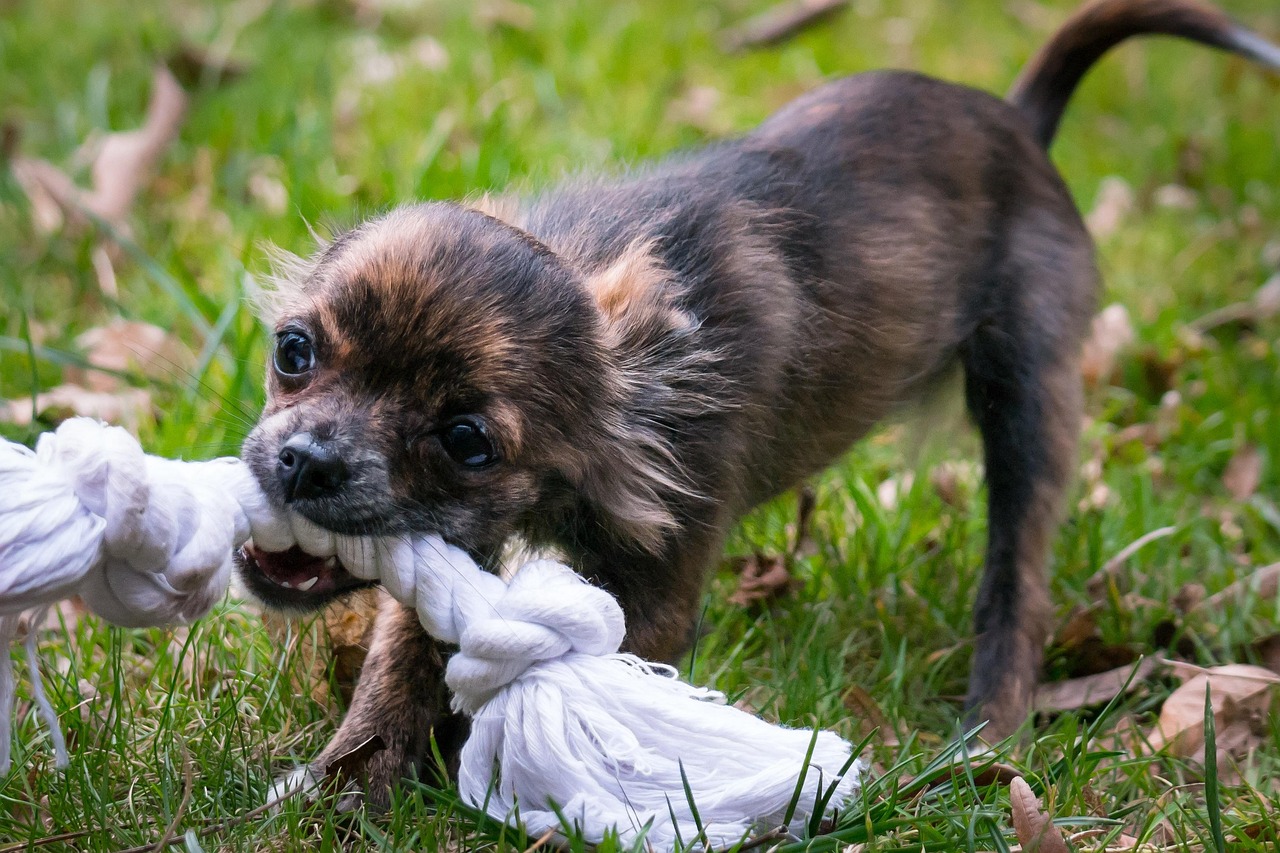
The research team worked with a handful of so-called “Gifted Word Learner” dogs. These are rare pets that can learn dozens or even hundreds of object names. The dogs and their owners were asked to play with two kinds of toys: fetch toys and tug toys. The toys came in all shapes and colors, but the owners always used them in the same way, throwing the fetch toys and pulling on the tug toys.
After a week of play at home, the researchers tested the dogs with brand-new toys they had never seen before. The twist was that the owners didn’t give any extra hints. When the dogs heard the word “fetch” or “tug,” they had to pick out the correct type of toy from the unfamiliar set.
Most of the dogs picked the right toy more often than by chance. They were not relying on how the toy looked. They were focusing on what it was meant to do.
That’s a big deal because it means the dogs were forming a kind of category in their minds. They weren’t just memorizing “ball equals fetch” and “rope equals tug.” Instead, they were extending the meaning of a word to a new object based on its function.
This is the same kind of mental shortcut humans use all the time. When a toddler sees a new kind of spoon, they can still call it a spoon because they understand it is used for eating, even if it looks different from the spoons at home.
The study also found that the dogs held on to these functional categories for some time. Even without daily reminders, they remembered which toys belonged in which group. That suggests their understanding is not just a quick trick, but something more durable.
Of course, not every dog will do this. The research focused on dogs already known to be unusually good with words. Scientists are careful to point out that most pets may not generalize toy functions in the same way. Still, the finding raises interesting questions. How many dogs might be capable of this if trained differently? Are these skills linked to specific breeds, or is it more about individual talent?
Beyond curiosity about canine smarts, the study hints at deeper issues. Functional categorization is a building block of language and conceptual thought. Humans rely on it to sort out the world quickly—tools, foods, furniture, vehicles. Seeing dogs display a similar ability suggests that the roots of this kind of thinking may be broader in the animal kingdom than we assumed.
The researchers emphasize that the dogs learned in a natural setting, through everyday play with their owners. That makes the finding all the more striking. It wasn’t a high-pressure lab setup. It was a game of fetch and tug, the kind that happens in countless living rooms and backyards.
So the next time you throw a ball for your dog, it’s worth wondering what’s really going on in that furry head. Maybe it’s not just excitement. Maybe, in its own way, your dog knows that “ball” isn’t just an object; it’s a category of things meant to be chased, caught, and proudly returned.
Story Source: Fugazza et al. (2025), published in Current Biology. Read the original study here.