

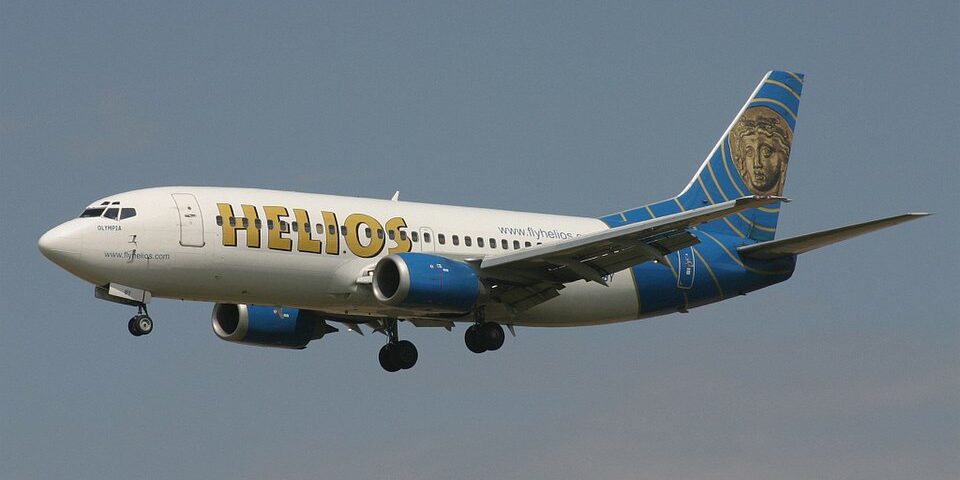
On August 14, 2005, a Helios Airways Boeing 737 departed Cyprus for Athens with a fatal configuration error. Earlier that morning, an engineer had set the pressurization mode selector to “manual” for a ground leak test but failed to flip it back to “auto.” As the plane climbed, the cabin did not pressurize, and the air became dangerously thin.

“wait, that’s real?”
The flight crew misinterpreted a cabin altitude warning horn for a takeoff configuration alarm, a confusion caused by the two alerts sounding identical on that aircraft model. Distracted by the alarm and suffering the early effects of hypoxia (oxygen starvation), the pilots failed to realize they were losing oxygen. They eventually fell unconscious, leaving the plane to fly on autopilot toward Greece.
As the aircraft flew aimlessly over Athens, two Greek F-16 fighter jets intercepted the “ghost flight” and observed a haunting scene: the captain’s seat was empty, the co-pilot was slumped over the controls, and passengers appeared motionless with oxygen masks dangling in their cabin.
Also Read: How a Paper Clip Saved a $750 Million Bomber Plane
Meanwhile, flight attendant Andreas Prodromou, who used portable oxygen bottles to stay conscious, managed to enter the cockpit in a desperate, final attempt to save the plane.
But there was little he could do. The aircraft ran out of fuel, causing both engines to flame out. Though Prodromou had a pilot’s license, he was not qualified to fly the Boeing 737. Still, he managed to bank the plane away from Athens toward a rural area.
The plane spiraled down and crashed into a hillside near Grammatiko, Greece, killing all 121 people on board. The disaster led to major changes in pilot training and prompted Boeing to change the distinct sounds of cockpit warning alarms.
And if you made it here, you’re probably the kind of person who’d like what we send on Sundays — stories like this, every week, straight to your inbox. Join our newsletter.
Source: Wikipedia, The Guardian