


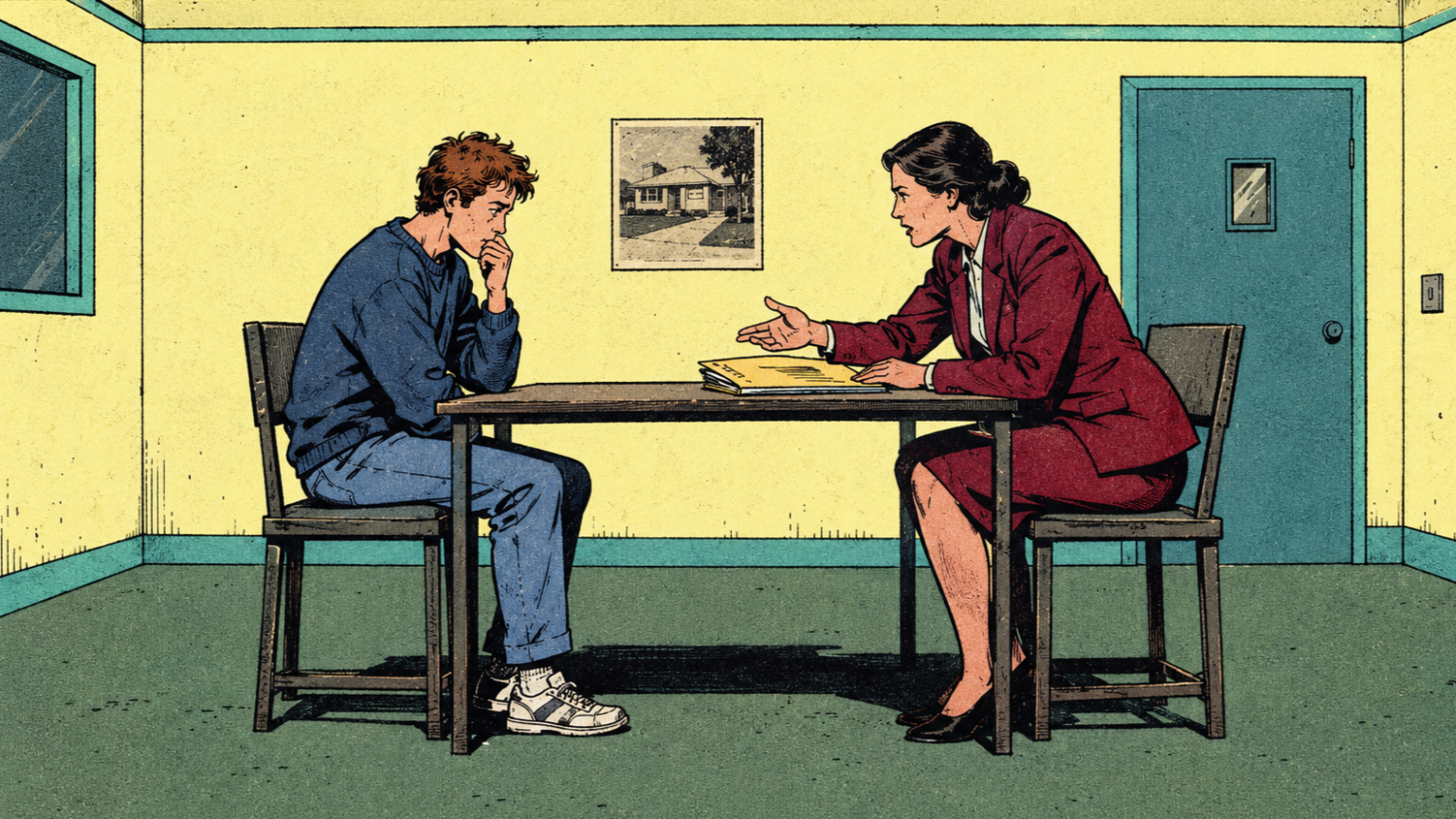
So you didn’t do any crime when you were around thirteen. You’re sure about that, you remember it. And then one day a researcher comes to you and says you did some crime at that age, your parents have told them about that. You say, I don’t really remember that. The researcher says, come on, it’s normal, trying to remember hard enough often helps. And then after a couple of weeks you start giving them details about the crime that you’ve never committed.
This is what actually happened in a 2015 study by psychologists Julia Shaw and Stephen Porter, on 60 university students. Each student was told about two events from their early teens. One was real, and the researchers had checked the details with the student’s parents beforehand. The other was invented and emotional in nature. For half of the students it was a crime, like theft, assault, or assault with a weapon, that ended with police contact. The researchers then interviewed each student three times over a couple of weeks, asking them to tell everything they remembered, where it happened and who was there, and to picture what it would have been like. When someone couldn’t remember, they were told that was normal, and that trying to picture it often helps.
By the end, about 70 percent of the students who were told about the false crime believed it. They remembered committing it, and they didn’t just say yes, I think that happened. They described it in detail, in some cases down to what the police officers looked like and how they felt in the moment.
None of it had ever happened, and nobody was threatening or forcing them. They were ordinary students, talking to a friendly researcher, in a few short sessions.
Also Read: Why You’re More Addicted to Likes Than You Think
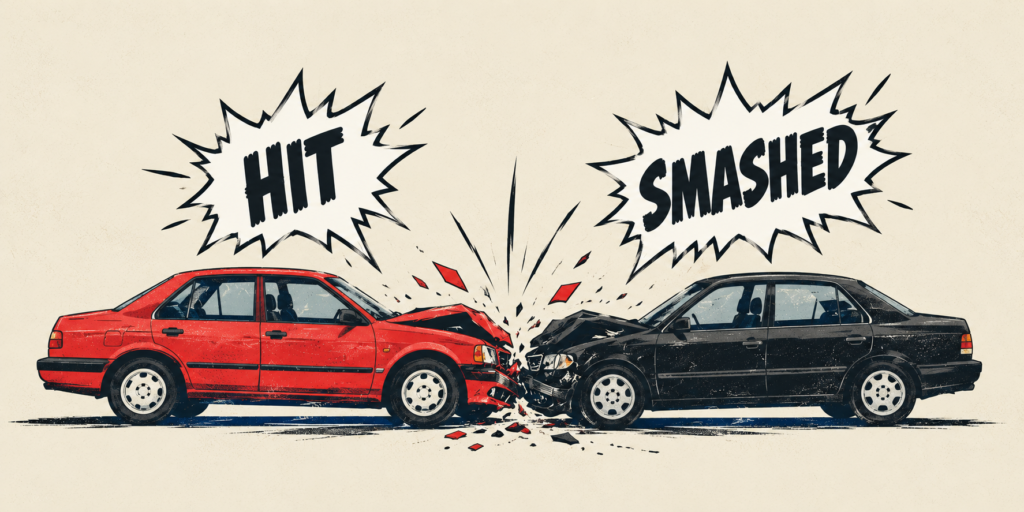
This wasn’t the first time researchers had found that memory could be changed. In 1974, they showed people a film of a car crash and asked how fast the cars were going. The only thing they changed was a single word in the question. Some people were asked how fast the cars were going when they “hit” each other. Others were asked about the same crash, but with the word “smashed.” The people who heard “smashed” gave noticeably higher speed estimates. A week later, they were asked whether they’d seen broken glass at the scene. There was none. But the people who had heard “smashed” were more than twice as likely to say yes.
Both of these studies reveal something basic about how our memory works, that it is fundamentally reconstructive rather than reproductive. It isn’t a video recording of the original experience, but something dynamically constructed from many factors like what we already know, what we expect to have happened, what we can imagine, and what the clues around us suggest.


You can see all of that working in the crime study. The researchers told participants that their parents had provided the information, and because people inherently trust their parents’ memory of their childhood, the made-up event started out with a lot of credibility. The interviewer also added real details like the city they lived in and the name of a friend who was supposedly there, so it felt even more believable.
When they said they couldn’t remember the crime, the interviewer asked them to picture what it would have been like, and sent them home to practice visualizing it every night (ahh… their homework). That’s imagination inflation at work, because every time they pictured it, the scene felt a little more familiar, and over time the brain struggles to tell the difference between something it imagined and something it actually lived through. The more familiar something feels, the more likely we are to believe it happened.
And then in the car crash study, the brain used the language of the question itself to implicitly infer the speed of the cars and the presence of broken glass, which shaped what they remembered. That’s a good example of the misinformation effect, where information received after an event can distort the memory of it.
Elizabeth Loftus, who led that study, has also shown that an entirely false memory can be implanted through her lost in the mall experiment. In 1995, she gave 24 participants four stories from their childhood, one of which was false. It said that around the age of five the person had been lost in a shopping mall, crying, until an elderly stranger found them and helped them find their family. The participants were asked to write down everything they remembered about each story in detail.
About 25 percent of the participants reported remembering the false event. When they were told that one of the four stories was false and asked to identify it, five participants failed to pick the mall story and chose one of the true stories as the false one (so they doubted a real memory and accepted the invented one).
Also Read: Your Brain Changes at 9, 32, 66, and 83, Scientists Find
In these studies, at least, the false memories did no harm. But in real life, nobody is there to tell us which memory is false, and sometimes that costs nothing, while other times it costs a person years of their life.
In July 1984, a man broke into the apartment of Jennifer Thompson, a 22-year-old college student in North Carolina, and sexually assaulted her. When the police showed her photos, she picked a man named Ronald Cotton as the attacker, and she picked him again in a live lineup. She wasn’t fully sure at first, but the detective told her she had chosen the same man she picked from the photos, and from then on her certainty only grew. At the trial she told the court she was completely sure, and Cotton was sentenced to life in prison.
Meanwhile another inmate, Bobby Poole, had been telling people in prison that he was the real attacker, and when Cotton requested a retrial, Poole was brought into the courtroom. Thompson looked at him and said she had never seen him before. Cotton stayed in prison for about ten and a half years in total, until DNA testing in 1995 showed that Poole was the attacker. Even after she knew the truth, she could still close her eyes and see Cotton’s face.
In the end, all these studies and cases tell the same story, that how real a memory feels says very little about whether it is accurate. Memory is not raw footage recorded by your phone’s camera. It is composite, edited, and constructed from many factors, much like a movie. So the next time an old memory feels completely real (yes, even that one), ask yourself how much of it you actually saw…
Story Sources: Wikipedia – False Memory, Association for Psychological Science, Wikipedia – Lost in the mall technique, ScienceDirect, Varndean, ResearchGate, Wikipedia – Imagination inflation, NPR, The Daily Cardinal, ScienceDirect – Reconstructive Memory, PubMed