

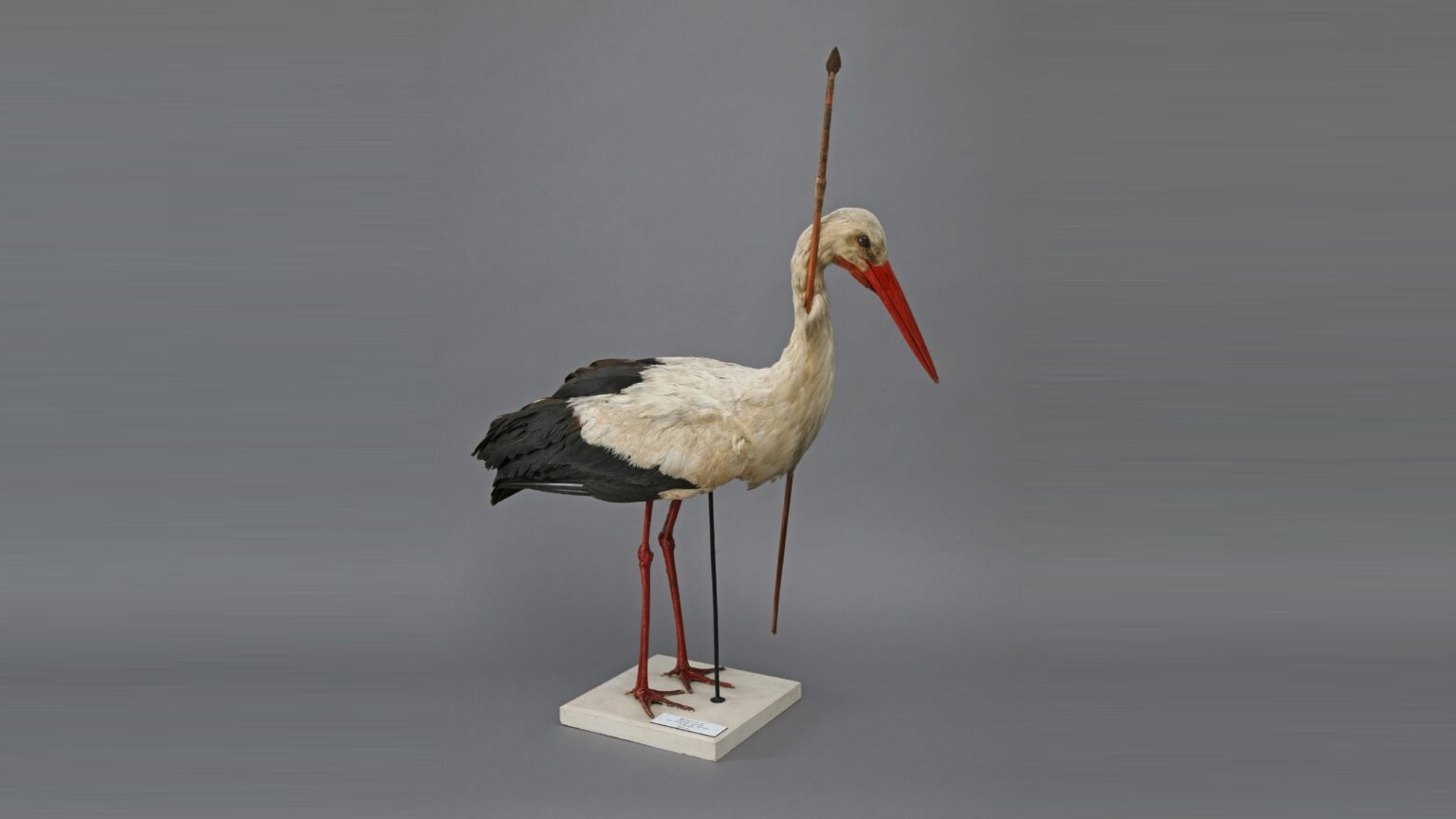
In the spring of 1822, the people of Klütz, a small town on the Baltic coast of northern Germany, had something weird to look at. A white stork had shown up on a nearby estate with a long thin stick hanging straight down from its neck, more than two feet long, and the bird didn’t seem to care about it much.
It flew around and walked around like any other stork, while the other storks kept pecking at the stick, trying to yank it out and never managing to. People came to watch for a few days, maybe a few weeks, until the landowner shot the bird on 21 May, just to satisfy everyone’s curiosity.
The body ended up with the ruler of the region, who had it preserved and handed it over to the zoological collection at the University of Rostock. That’s where a physician and botanist named Heinrich Gustav Flörke took a proper look at it.
Also Read: The Baboon Who Worked as a Railway Signalman for 9 Years
The stick turned out to be an arrow, made from fine-veined wood he recognised as tropical, with a wide iron head tied on with sinew. That’s why this bird is called the Pfeilstorch, which is German for arrow stork. The arrow had gone in under the skin on the right side of the neck and stuck out well past the body at both ends, and Flörke figured the bird must have been hit somewhere really far away.
He guessed the upper Nile region, deep inland in Africa, though he was careful to say he couldn’t prove it.
That guess sounded bold at the time because nobody knew for sure that birds do migrate between Europe and Africa. Everyone could see birds like storks and swallows disappear in autumn and come back in spring, but where they went in between was still a mystery, with some really weird answers.
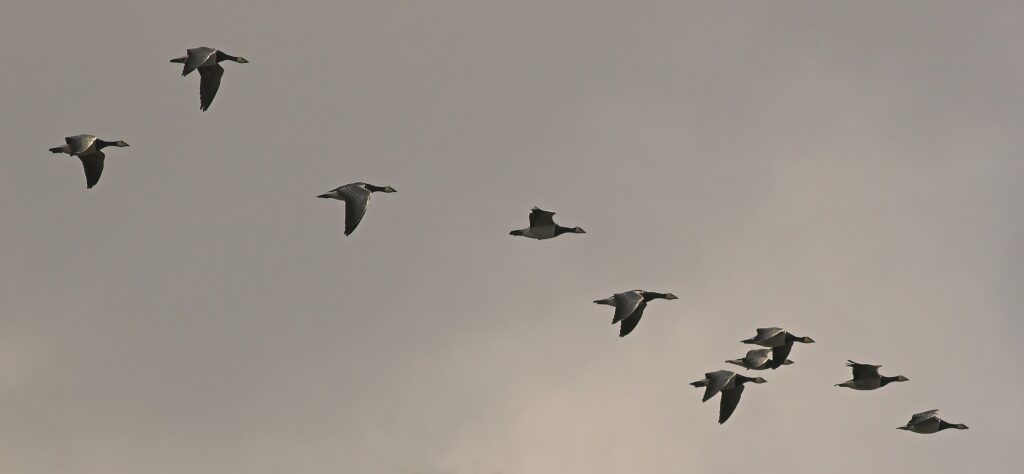
Aristotle, whose idea of hibernating birds lasted about two thousand years, thought some birds didn’t travel at all and just spent winter in holes or hollow trees, and that redstarts turned into robins when it got cold. He did write that cranes flew from the cold plains north of the Black Sea down to the marshes where the Nile begins, and Herodotus described much the same journey.
The guesses only got wilder over the centuries. Even Carl Linnaeus, the father of biological taxonomy, believed swallows spent the winter asleep in the mud at the bottom of lakes, and an English scholar in the 1600s figured birds flew to the moon, a two-month trip they mostly slept through, with no air resistance to slow them down.
Why would anyone steal hundreds of dead birds’ skins from a museum? The Feather Thief tells the bizarre true story, including why the thief never spent a day in prison.
Behind all of these guesses was the same doubt, that these small birds could really fly thousands of kilometres and then do it all over again the next year.
Against all that, a stork standing in northern Germany with a weapon made in tropical Africa stuck in its neck was hard to wave away. It was the first hard proof that birds really do migrate long distances, spending the winter far to the south and flying back north for the summer. In a way the arrow was a tracking band nobody had planned to attach.
However, it didn’t change our understanding of bird migration overnight. Our knowledge increased gradually as Europeans travelled and reported back on where birds spent the winter, and later through banding birds and eventually, of course, through satellites.
The Rostock Pfeilstorch is remembered as a landmark in the story of bird migration, and it turned out to be only the first of about two dozen such birds documented in Germany with arrows from Africa. It is still on display today in the university’s zoological collection, arrow included, more than two hundred years after it turned up near Klütz.
Story Sources: Audubon, Spektrum, Wikipedia, Cambridge Day, The Medieval Bestiary, Ornithology.com, Country Life, NV Bird Alliance