


Robots are usually terrible at improvising. Give most of them a new object or an unfamiliar task, and they freeze, fumble, or fail completely. Teaching them even simple manipulations often requires hundreds of demonstrations or lengthy retraining.
But researchers at Imperial College London may have just flipped that problem on its head. Using a new approach called Multi-Task Trajectory Transfer (MT3), they trained a single robotic arm to complete 1,000 distinct manipulation tasks in under 24 hours, using just a single demonstration per task.
Published in Science Robotics, the study tackles a core limitation in robot learning—data hunger. Traditional imitation learning, known as behavioral cloning, relies on massive datasets. Each new task usually means dozens or hundreds of demonstrations, with neural networks encoding all motions into a monolithic policy. MT3 takes a radically different approach.
Also Read: AI Successfully Controls Satellite Attitude in Orbit for the First Time
Instead of a single, all-encompassing policy, MT3 decomposes tasks into two sequential phases: alignment and interaction. The alignment phase moves the robot’s arm or object into the right relative position for the task, like aligning a plug with a socket, while the interaction phase executes the precise manipulation, like inserting a plug into a socket. By separating these steps, the robot can generalize more efficiently, even when only one demonstration is provided.
The second key innovation is retrieval-based generalization. Rather than learning everything upfront, MT3 stores demonstrations in memory. When faced with a new task, it identifies the most relevant prior demonstration and adapts it to the current scenario. As co-authors Kamil Dreczkowski and Pietro Vitiello explained to Tech Xplore, “This demonstration is then used to inform the policy about how to align with the test object and how to interact with it… Crucially, the robot is guaranteed to never do anything that was not explicitly demonstrated.”
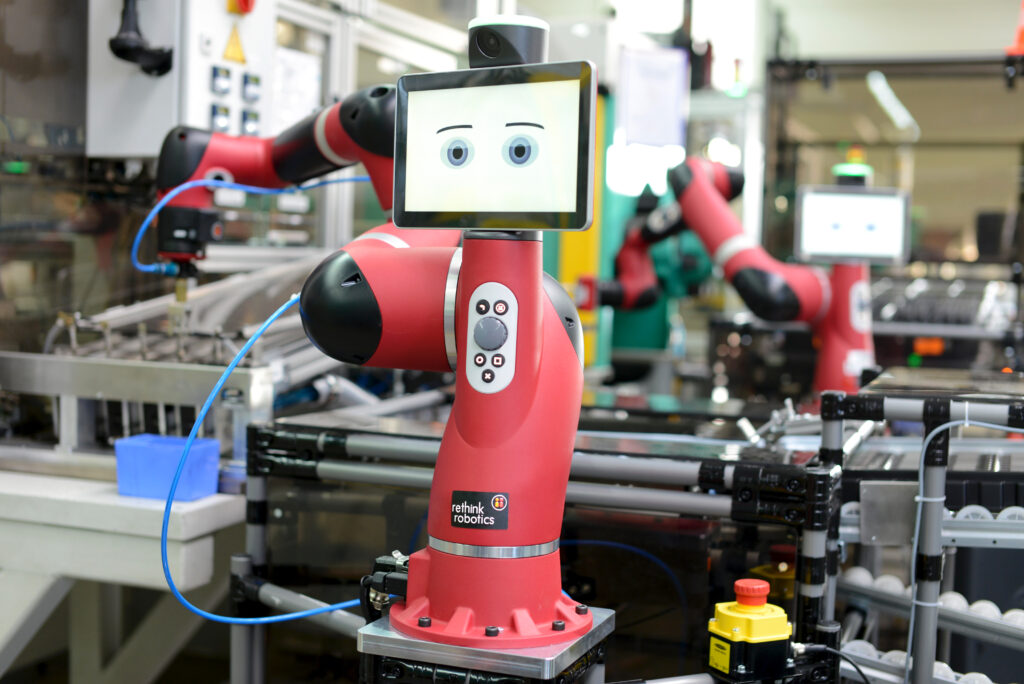
To test the method’s limits, the team had a single Sawyer robot, a robotic system with a single arm, perform 1,000 tasks involving 402 different objects across 31 skill categories.
They then ran 2,200 evaluations, testing performance on these tasks as well as on 100 completely unseen tasks, and introduced variations like distractor objects and changing lighting conditions.
The results showed that MT3 learned new tasks efficiently, retained reliability across diverse scenarios, and learned new tasks roughly ten times more efficiently than traditional behavior cloning approaches.
Also Read: Inspired by Spider-Man, Scientists Recreate Web-Slinging Technology
What makes MT3 so robust is that its actions remain interpretable and trustworthy. Unlike black-box deep learning methods, observers can see exactly how the robot will act before execution, which is crucial for real-world deployment. Some failure modes—like pose estimation errors or selecting the wrong demonstration—still occur, but the system’s structured approach dramatically reduces unpredictable behavior.
“This work demonstrates that complex, large-scale robot learning is possible without massive datasets or enormous neural models,” the researchers note. Beyond its works in household environments, MT3’s efficiency could transform industrial automation, assistive robotics, and any setting where machines need to adapt quickly to new objects or tasks.
The team plans to continue improving MT3, focusing on adapting trajectories to object geometries and enabling more robust generalization to unseen task variations.
For now, the achievement is striking, a single robot, a thousand tasks, one day, one demonstration per task—a glimpse of a future where robots learn almost as fast as humans.
The study was published in Science Robotics,