

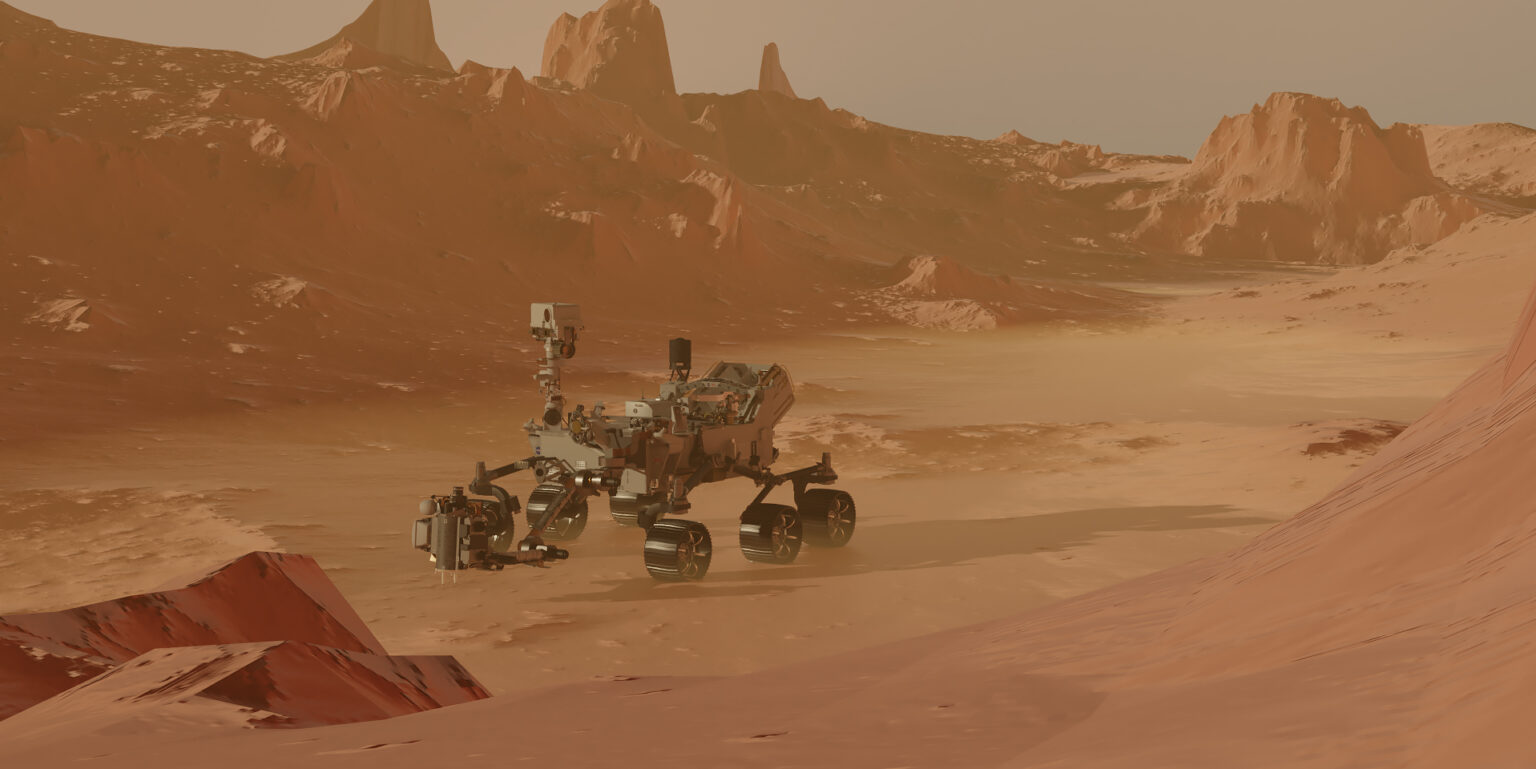
For the first time in history, a rover on another planet has successfully navigated the Martian wilderness using a map drawn by artificial intelligence.
In a breakthrough experiment conducted on December 8 and 10, 2025, NASA’s Perseverance rover completed two drives, totaling 456 meters (1,496 feet), using waypoints selected entirely by a generative AI model. This marks a radical departure from nearly three decades of Martian exploration, where every meter of progress was the result of human “rover drivers” on Earth.
“The fundamental elements of generative AI are showing a lot of promise in streamlining the pillars of autonomous navigation for off-planet driving,” said Vandi Verma, a space roboticist at JPL. “We are moving towards a day where generative AI and other smart tools will help our surface rovers handle kilometer-scale drives.“
Also Read: AI Successfully Controls Satellite Attitude in Orbit for the First Time
Traditionally, navigating Mars has been less like driving a car and more like a slow, high-stakes game of chess. With Earth and Mars separated by about 225 million kilometers on average, communication delays can stretch up to 20 minutes one way, making real-time operation, or “joy-sticking,” impossible.
Instead, rover drives are planned in advance by human teams on Earth. Engineers study fresh images from the rover along with high-resolution orbital maps, then manually sketch a safe route across the terrain. Rather than issuing a single long drive command, the route is broken into short segments marked by waypoints, usually spaced no more than about 100 meters apart, allowing the rover to move cautiously and pause frequently to reassess its surroundings.
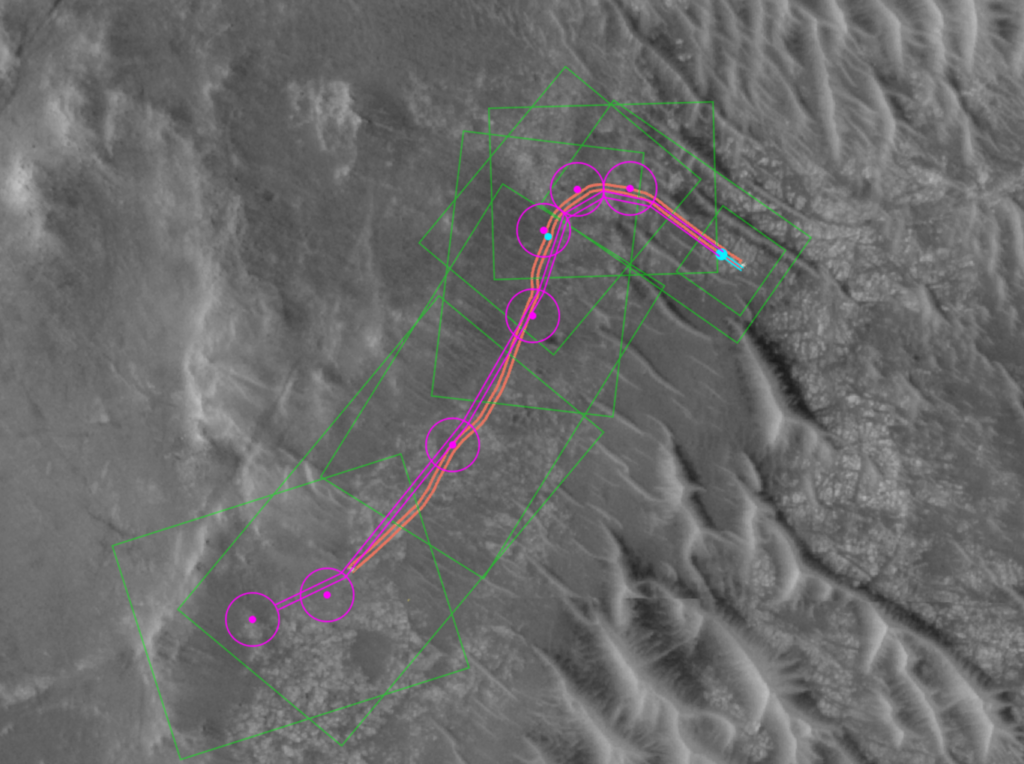
To move beyond this time-consuming process, researchers at NASA’s Jet Propulsion Laboratory (JPL) collaborated with AI firm Anthropic, using their Claude models to turn the rover into a more independent explorer. The AI was fed the same orbital imagery and terrain data used by human planners and generated its own driving route by placing waypoints.
But you don’t just hand the keys to a multi-billion-dollar machine to a generative AI system without a safety net. Before the commands were beamed across the void, the mission team ran the AI’s plan through a JPL’s “digital twin“—a virtual replica of Perseverance—to check over 500,000 telemetry variables.
This ensured the AI’s instructions wouldn’t strain the rover’s hardware or steer it into dangerous surface features such as boulder fields, rocky outcrops, and loose sand that could trap a wheel.
The result was a successful test. On December 8, Perseverance followed a route generated by the AI, using its waypoints to travel 210 meters (689 feet). Two days later, the rover completed another AI-planned drive of 246 meters (807 feet), safely navigating across rocky terrain.
Also Read: AI Helps a Robot Fly Autonomously Inside the ISS for the First Time
“This demonstration shows how far our capabilities have advanced and broadens how we will explore other worlds,” said NASA Administrator Jared Isaacman. “Autonomous technologies like this can help missions to operate more efficiently, respond to challenging terrain, and increase science return as distance from Earth grows.”
These AI-planned drives show how artificial intelligence is moving from a supporting role to an operational one in space robotics. With greater onboard autonomy, future rovers may independently plan navigation, assess terrain risks, and adjust their behavior in real time, reshaping exploration on distant worlds where communication delays make direct human control impractical.