

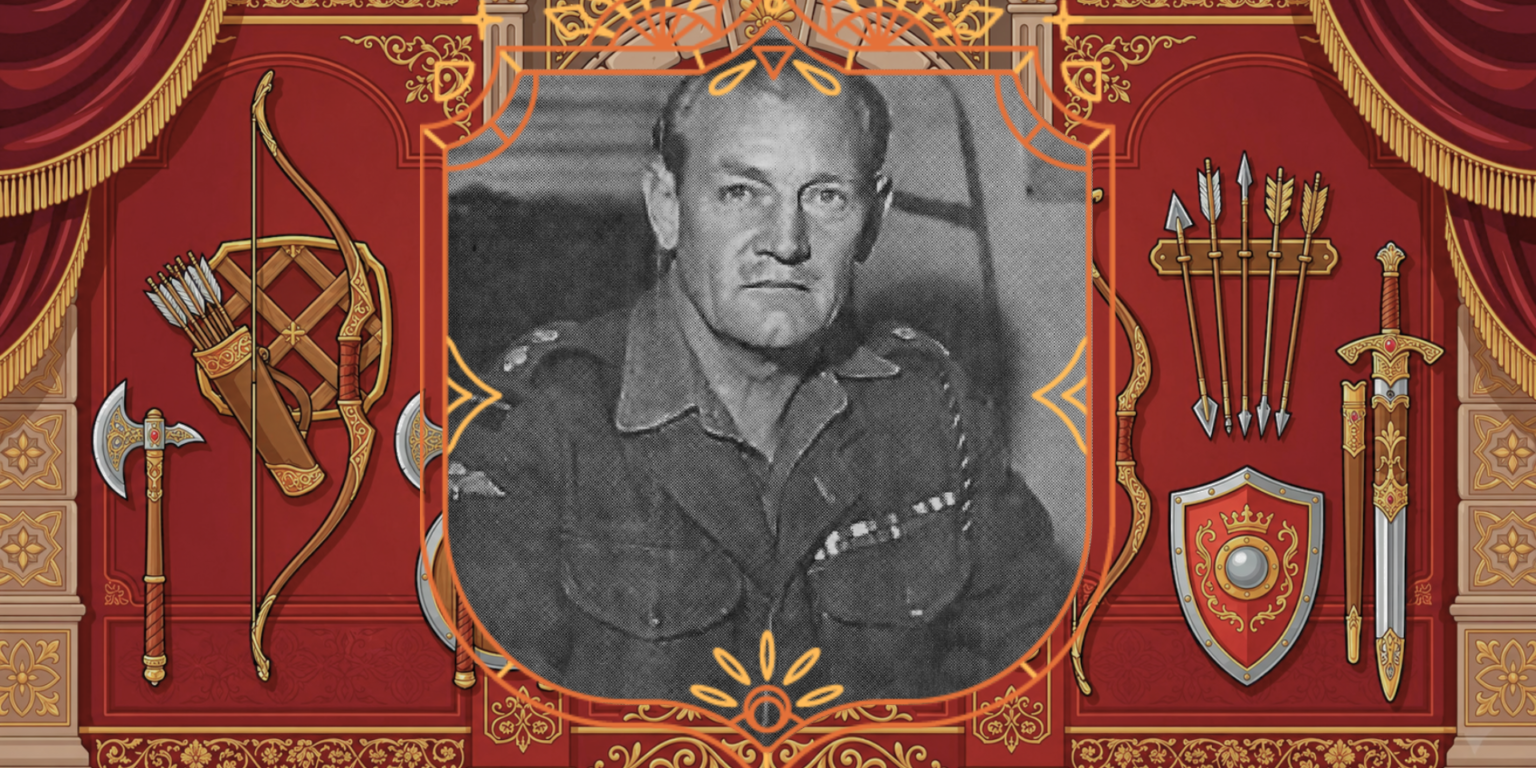
Jack Churchill, also known as “Fighting Jack” or “Mad Jack,” was a British Army officer who fought in World War II carrying a broadsword, a longbow, and bagpipes. He was a decorated lieutenant colonel in one of history’s most mechanized wars. His personal motto said everything: “Any officer who goes into action without his sword is improperly dressed.”

"wait, that's real?"
Before the war, Churchill had already lived several lives: motorcycle adventurer in Burma, newspaper editor in Kenya, male model, film actor, and Britain’s representative at the 1939 World Archery Championships in Oslo. When Germany invaded Poland, he rejoined the army and got straight back to business.
During an early raid in France, he shot a German soldier with a barbed arrow — making him the only British soldier confirmed to have killed an enemy with a longbow during the war, and by most accounts, the last recorded longbow kill in recorded modern warfare history.
Also Read: Surrounded by Food, Soviet Scientists Chose to Starve in WWII
At Salerno, Italy, Mad Jack led a raid with just one junior soldier, infiltrated a German-held town, and marched back with 42 prisoners — including a mortar squad — with the wounded being carried on carts pushed by the German prisoners themselves. He then went back alone to retrieve his broadsword, which he’d dropped in hand-to-hand combat.
Not for symbolic reasons. He just wanted his sword back.
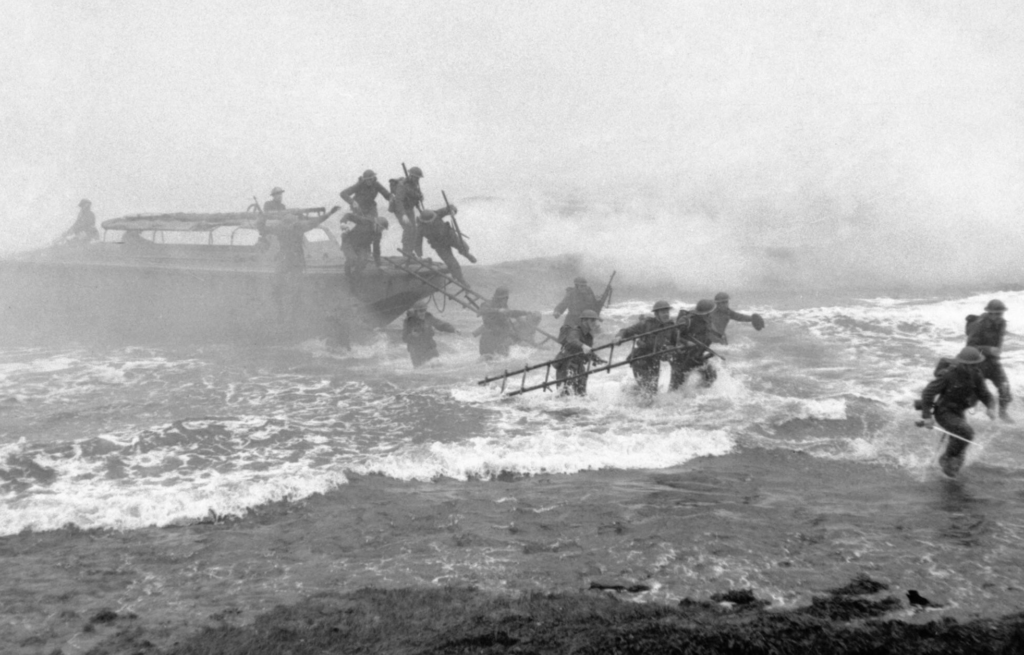
His luck finally broke in Yugoslavia, when a mortar strike killed or wounded his entire unit. Churchill was the lone survivor — still playing “Will Ye No Come Back Again?” on his bagpipes as the Germans closed in, until a grenade knocked him unconscious. The Germans, suspecting he might be related to Winston Churchill, flew him to Berlin for interrogation and threw him in a prison camp.
"wait, that's real?"
He tried to escape with another officer but was recaptured near the Baltic coast and sent to a camp in Tyrol. There, prisoners feared they were about to be executed by SS guards — so they appealed to senior German army officers, who moved in to protect them. The SS guards backed down and left the prisoners behind. Churchill then walked 150 kilometres to Verona, Italy, and met American troops.
Just a few months later, he was sent to Burma to fight against Japan— but by the time he arrived, Hiroshima and Nagasaki had been bombed, and the war was over. Churchill was reportedly unhappy about it. According to fellow soldiers, he exclaimed, “If it wasn’t for those damn Yanks, we could have kept the war going another 10 years!”
Churchill never really stopped. After the war he qualified as a parachutist, served in Palestine, and spent time as a military instructor in Australia. In retirement, he took up surfing. He died in 1996, aged 89 — a man so thoroughly built for chaos that peace never quite seemed to suit him.
And if you made it here, you’re probably the kind of person who’d like what we send on Sundays — stories like this, every week, straight to your inbox. Join our newsletter.
Further reading: All That’s Interesting, Wikipedia, Historic UK