

A man walks into a hospital in 1965 weighing 207 kg and doesn’t eat food again for over a year. Seems impossible, but it happened. That’s basically the whole plot of Angus Barbieri’s life story, and one of the most extreme examples of just how far the human body can be pushed.
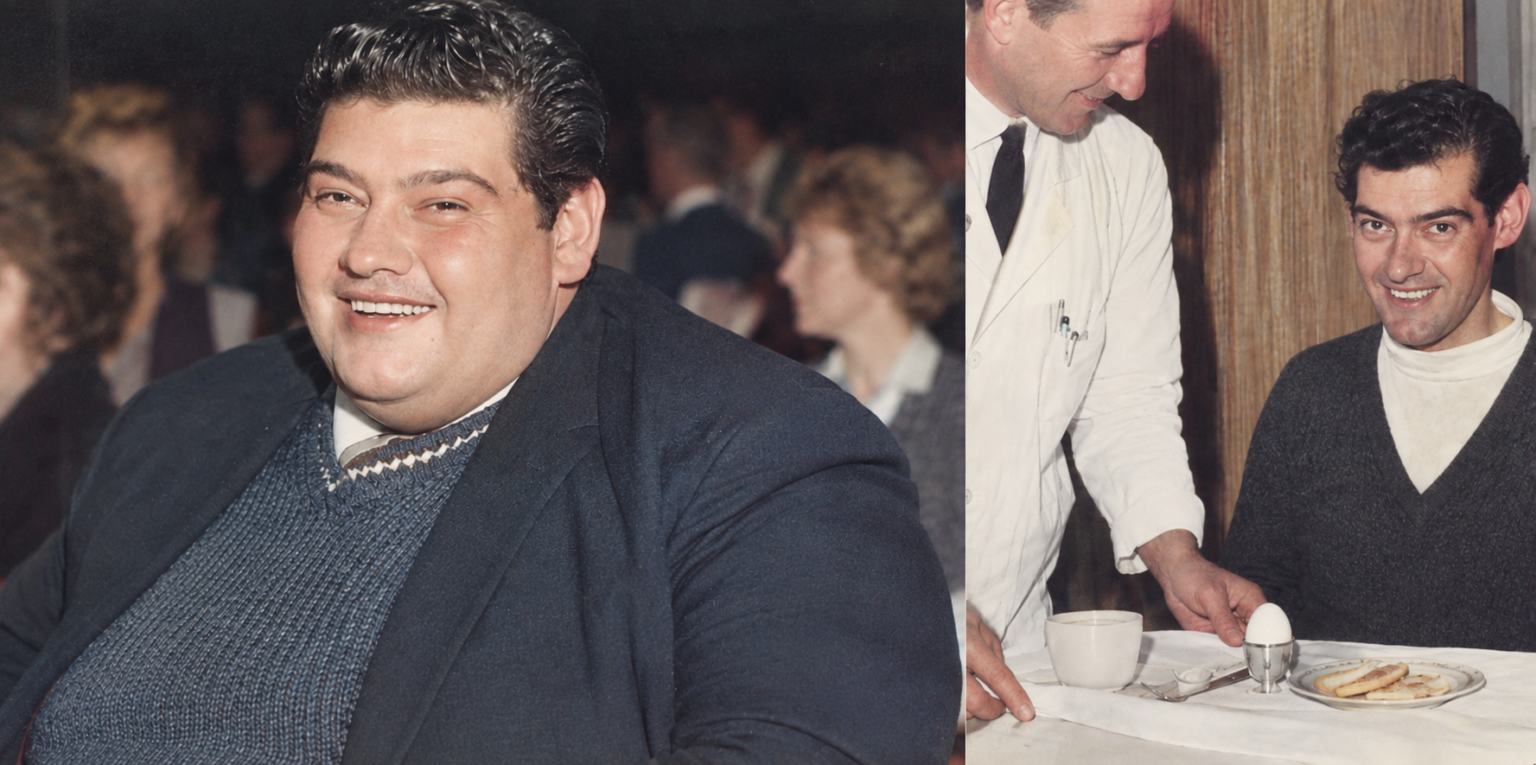
Barbieri was 27, from a small Scottish town called Tayport, where his parents ran a fish and chip shop. His weight had gotten so bad that everyday things were a struggle. At one point, a crowd had to physically push him through a bus door just so he could get to a football match. So in June 1965, he checked into Maryfield Hospital in Dundee, hoping to finally do something about it.
Initially, doctors planned a short fast for him. But Barbieri kept insisting on continuing because he was too eager to hit his “ideal” weight, and he adapted way better than doctors expected. He even quit his job at his dad’s chip shop just to avoid temptation, and the place ended up closing down without him.
Also Read: The Man Who Gave Life to 4 Billion People and Killed Millions
He started his fast on 14 June 1965, and for 382 days straight, he lived on tea, coffee, sparkling water, vitamins, and a bit of yeast for amino acids. He occasionally added milk or sugar to his drinks too, especially in the final weeks. That’s it. No solid food, not even a piece of fruit. His body turned to burning its own fat for energy, and at 207 kg, he had massive fat reserves to keep going.
Barbieri wasn’t even hospital-bound the whole time either. He mostly lived at home and just came in for checkups. Doctors were amazed by his ability to resist the temptation to eat entirely on his own. As time passed, he lost all his desire for food. At one point, his body had slowed down so much that he reportedly went 48 days without a stool.
"wait, that's real?"
The fast ended on 30 June 1966. Barbieri had gone from 207 kg down to 82 kg, losing around 125 kg total. Doctors eased him back onto food with salt and sugar for ten days first. Then, on July 11, 1966, after 1 year and 26 days, he finally ate one boiled egg and one slice of buttered bread. Reporters were there for it, and he told them, “I have forgotten what food tasted like… It went down OK. I feel a bit full, but I thoroughly enjoyed it.”
The fast became well known well beyond Scotland, and by 1971, Guinness officially recognized it as the longest fast without solid food on record. It’s still the record today, partly because Guinness doesn’t encourage fasting attempts for obvious safety reasons.
Also Read: Sperm Donor Carrying Rare Cancer-Causing Gene Fathers Nearly 200 Children
Barbieri celebrated his new shape with a three-week trip to Spain, and a follow-up study years later found his weight had stayed healthy at 89 kg with no lifelong damage. He moved to Warwick, got married, had two kids, and lived a normal rest of his life, passing away in 1990 at 51 from an illness.
In the end, this story shows just how remarkable our body can be at surviving off its own fat reserves, as long as the reserves are big enough in the first place. But cases like this are extremely rare, and doctors don’t recommend anyone try to replicate it. It worked out because of insane willpower, close monitoring, and a good amount of luck. Definitely not a diet plan to try at home.
Story Sources: Wikipedia, Men’s Health, Vintag, Diabetes.co.uk, ScienceAlert, The Courier