

The statistical odds of being struck by lightning once in a given year are about 1 in a million, and once in a lifetime, roughly 1 in 15,300. Pretty rare, right? Most of us hear thunder and instinctively flinch, half expecting it to come for us, but fortunately, it doesn’t.
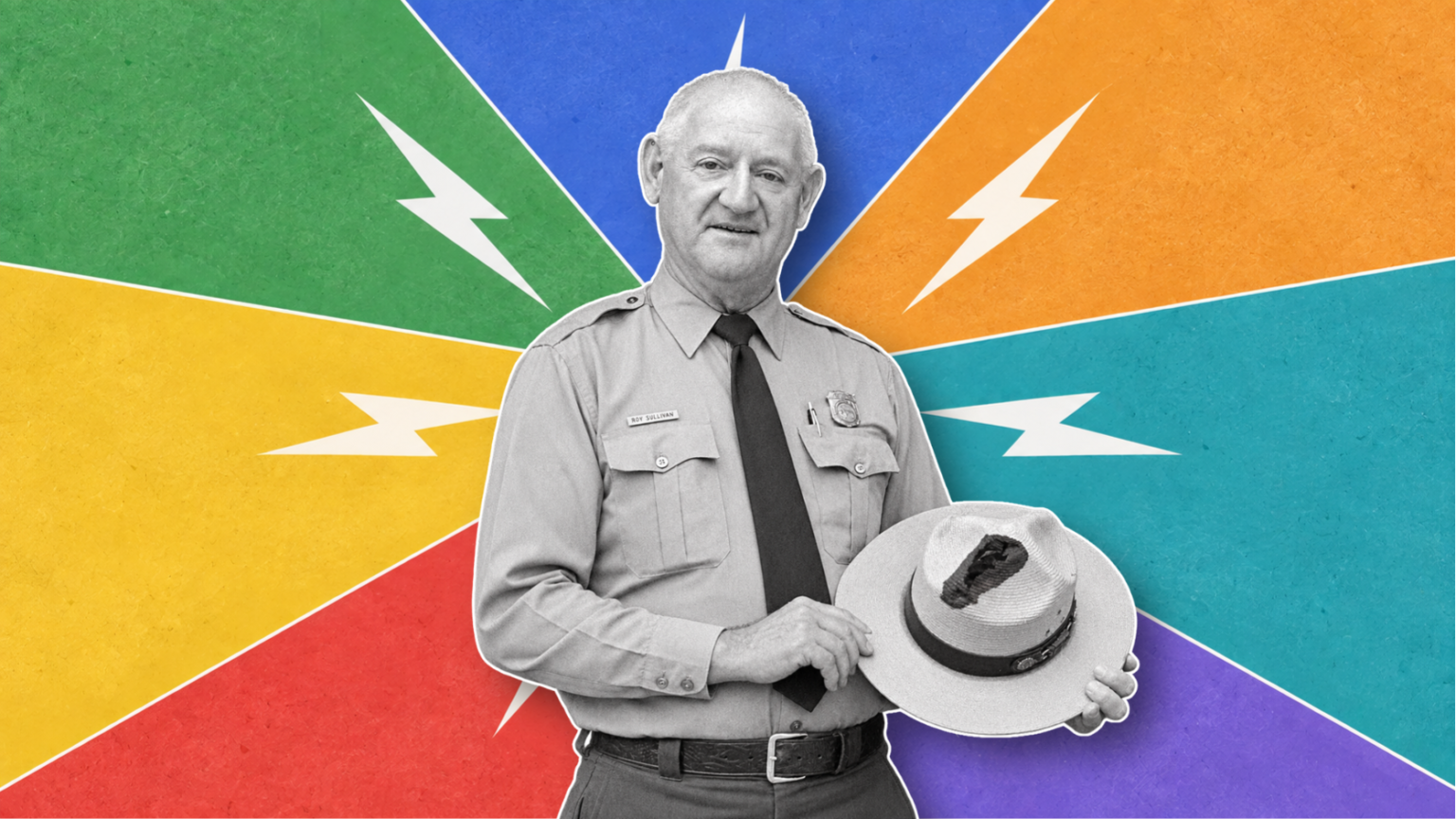
Roy Cleveland Sullivan wasn’t so fortunate. He was struck by lightning seven different times between 1942 and 1977, and survived every single one, earning him an official entry in the Guinness World Records that no one has come close to matching since.
Roy was born on February 7, 1912, in Greene County, Virginia. In 1936, he became a park ranger at Shenandoah National Park, a job that kept him outdoors on patrol for the next several decades. People said he looked like the actor Gene Hackman, and he wasn’t a man who scared easily, at least not before the lightning started.
The lightning found him for the first time in April 1942 while hiding from a thunderstorm in a newly built fire lookout tower that lacked a lightning rod. After the tower caught fire from multiple lightning strikes, Sullivan ran outside, only to be hit seconds later. The bolt burned a half-inch strip down his right leg, struck his toe, and blew a hole through his shoe.
While it’s obvious to assume there’s no chance of ‘surviving’ a lightning strike that runs hotter than the surface of the sun and carries immense voltages, that’s not actually true. About 90 percent of people struck by lightning survive it, and for those who don’t, the most common cause is cardiac arrest or respiratory failure rather than being burned to nothing in a blink.
For Roy, this strike alone had already made him one of the rare 1-in-15,300, a story he could tell for the rest of his life. He had no idea it was only the beginning…
Twenty-seven years later, lightning found him again in July 1969. While driving a park truck along a mountain road, a bolt hit nearby trees, deflected through the open truck window, and knocked Sullivan unconscious. It burned off his eyebrows and eyelashes and set his hair ablaze before the vehicle coasted to a halt near a cliff edge.
Just a year later, in July 1970, Sullivan was struck while standing in his own front yard. Lightning hit a nearby transformer and jumped to his left shoulder, leaving severe burns.
In April 1972, while working inside a park guardhouse, lightning set his hair on fire for a second time, forcing him to rush to the bathroom and douse his head with wet towels. It was after this strike that Sullivan began carrying a can of water with him everywhere in his truck, convinced that a supernatural force was hunting him. He believed he would somehow attract lightning even standing in a crowd of people, as if he were Thor’s unlucky mortal understudy, minus the hammer and the glory.
That fear proved justified in August 1973, when he saw a storm cloud forming while on patrol and tried to drive away from it. He was convinced the cloud was actually following him, and when he finally thought he’d outrun it, he stepped out of his truck. Moments later, lightning struck him down his left side, throwing off his shoe and setting his hair on fire yet again (that’s hair fire number three). Still conscious, he crawled back to the truck and poured his emergency can of water over his burning head.
Three years passed before the sixth strike found him, in June 1976. The pattern repeated almost exactly, a cloud he was sure was following him, an attempt to outrun it, and lightning catching his ankle anyway, as if the sky had learned his moves by now.
And… yeah, his hair caught fire again (four…).
The seventh and final documented strike struck him in June 1977, while he was fishing a pond for trout. The bolt caught the top of his head, burned down through his chest and stomach, and yes, set his hair on fire one more time (five…). Then, because apparently lightning alone wasn’t enough for one afternoon, a bear wandered up and tried to steal the trout off his line. Sullivan, hair still smoking, grabbed a branch and fought it off, the twenty-second bear he claimed to have driven away that way in his life.
All these strikes were documented by the superintendent of Shenandoah National Park, R. Taylor Hoskins. Hoskins, though, was never present at any of the reported strikes.
Just after the fourth strike hit, Sullivan had already become something of a national curiosity, appearing on television and picking up nicknames like the ‘Human Lightning Rod’ and the ‘Spark Ranger.’ Later, Guinness World Records recognized him for holding the record for most lightning strikes survived by a person. No one else on record had come anywhere close. How could anyone? Your odds of getting struck by lightning seven times are one in 24 nonillion, a number with thirty zeroes behind it.
At the end, despite surviving incredible electrical charges that scorched his hats and burned his body, Sullivan’s life ended not by nature, but by his own hand. In September 1983, at the age of 71, he died from a self-inflicted gunshot wound, reportedly driven by unrequited love, leaving behind an unmatched legacy as the man lightning could never kill.
Story Sources: Wikipedia, Guinness World Records, Business Today, Lightining Strike, Yahoo News, All That’s Intersting