

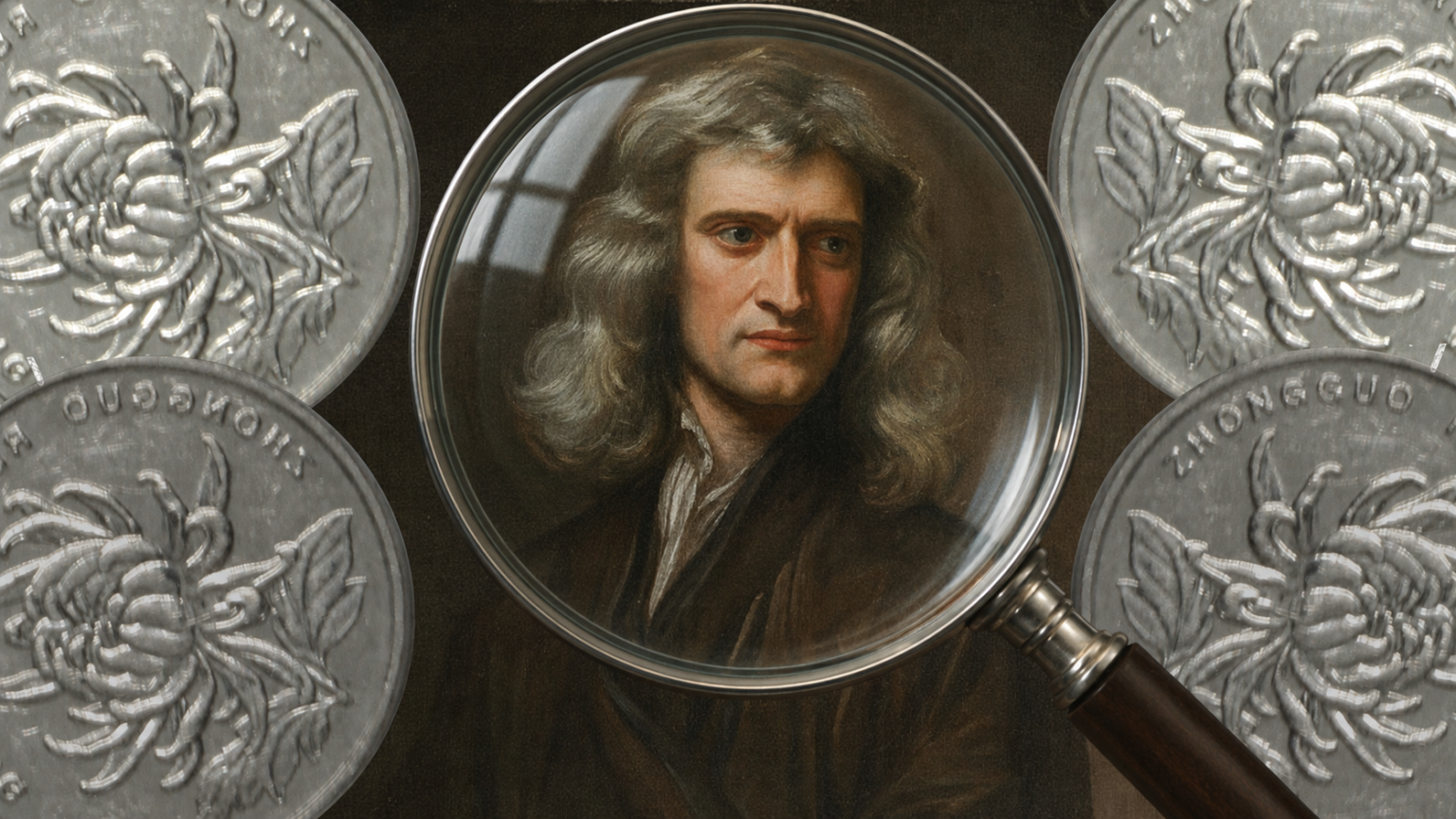
We all know Isaac Newton as the guy who got bonked on the head by an apple, gave us the three laws of motion, and invented calculus that tortured us in math class.
But what his bios usually skip is his Sherlock Holmes side. For three decades, the smartest man in England was basically a midnight detective.

"wait, that's real?"
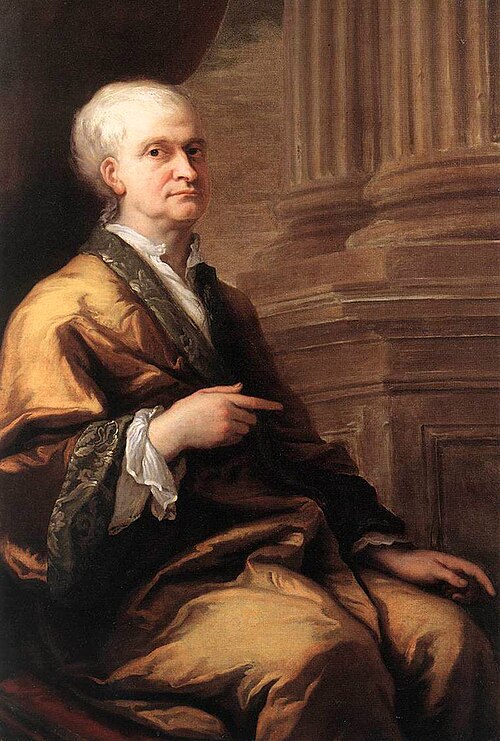
Back in 1696, Newton became Warden of the Royal Mint, a job that was supposed to be a cushy, glorified retirement gift. The work was just to show up, do some administrative stuff, collect a nice paycheck, and relax. But he threw himself into it with the same rigor he’d applied to physics.
At the time, England was facing a financial crisis due to its coinage system. Coins were made of actual silver, and their worth came from the weight of the metal inside. But most coins in circulation were old, irregular, “hammered” coins with uneven edges, making them a goldmine for scammers. Criminals started “coin clipping,” shaving tiny slivers of silver off the edges of thousands of coins to melt down and sell, while passing off the defaced coins as full value.
On top of that, counterfeiters were making fake coins from scratch, and because 17th-century minting technology wasn’t great, the fakes easily fooled the public.
Also Read: The Scientist Who Saved 200 Million Lives
Now, as warden, Newton actually had full magistrate authority, meaning he could legally investigate and prosecute counterfeiters himself. According to Thomas Levenson, author of the book Newton and the Counterfeiter: The Unknown Detective Career of the World’s Greatest Scientist, previous wardens had rarely paid attention to this part of the job, but Newton started hunting criminals himself. At first, he thought this wasn’t a job he wanted to dirty his hands with, but the Treasury said, if not you, then who else will?


Keep in mind, this was the 1690s. No fingerprints, no CCTV, no photographs. London wouldn’t get an actual police force for another 130 years. So how does a guy from a 5,000-person town like Cambridge catch criminals in a chaotic city of 600,000 people, with zero forensic tools?
You build a massive, underground spy network.
Newton went deep into the London underbelly. He recruited informants, flipped small-time crooks, and paid secret agents to infiltrate criminal rings. At some point, he even shelled out five pounds – more than a skilled artisan’s monthly wage – just to buy a fancy suit for one of his spies so the guy could blend in with a group of counterfeiters.
"wait, that's real?"
His biggest enemy was William Chaloner, a counterfeiter so cocky that he tried to publicly insult Newton’s competence while actively running his scams. Chaloner managed to dodge Newton for roughly three years. But you don’t play chess with the guy who mapped the universe. Newton methodically built an inescapable mountain of evidence against him. Chaloner was caught and sentenced to hang, spending his final days writing increasingly desperate letters begging Newton for mercy.
Also Read: The Scientist Who Faked Madness for 10 Years
While doing all this, Newton also casually became a pioneer of modern macroeconomics. He argued that a coin’s value comes from the actual metal in it, not some royal decree, and he defended the future use of credit and paper money decades before it became mainstream.
So yeah. The guy who discovered gravity also spent thirty years playing real-life detective, hunting down London’s most dangerous counterfeiters.
And if you made it here, you’re the kind of person who’d like what we send on Sundays — stories like this, every week, straight to your inbox. Join our newsletter.
Story Sources: NPR, Thomas Levenson website, Executed Today, Wikipedia, The London Mint Office