

Smallpox is one of the most lethal diseases in human history. For over three thousand years it devastated people across the world, killing around 30% of everyone it infected. Even as recently as the 1950s, it was still infecting roughly 50 million people a year. And yet, today, it is gone. Completely. The only disease ever eradicated from the face of the earth.

"wait, that's real?"
Most people credit this to some nameless sweep of 20th-century science. But there was a specific moment, a specific room, and a specific man. And I had never heard of him until recently.
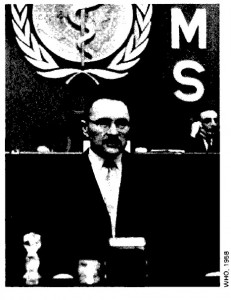
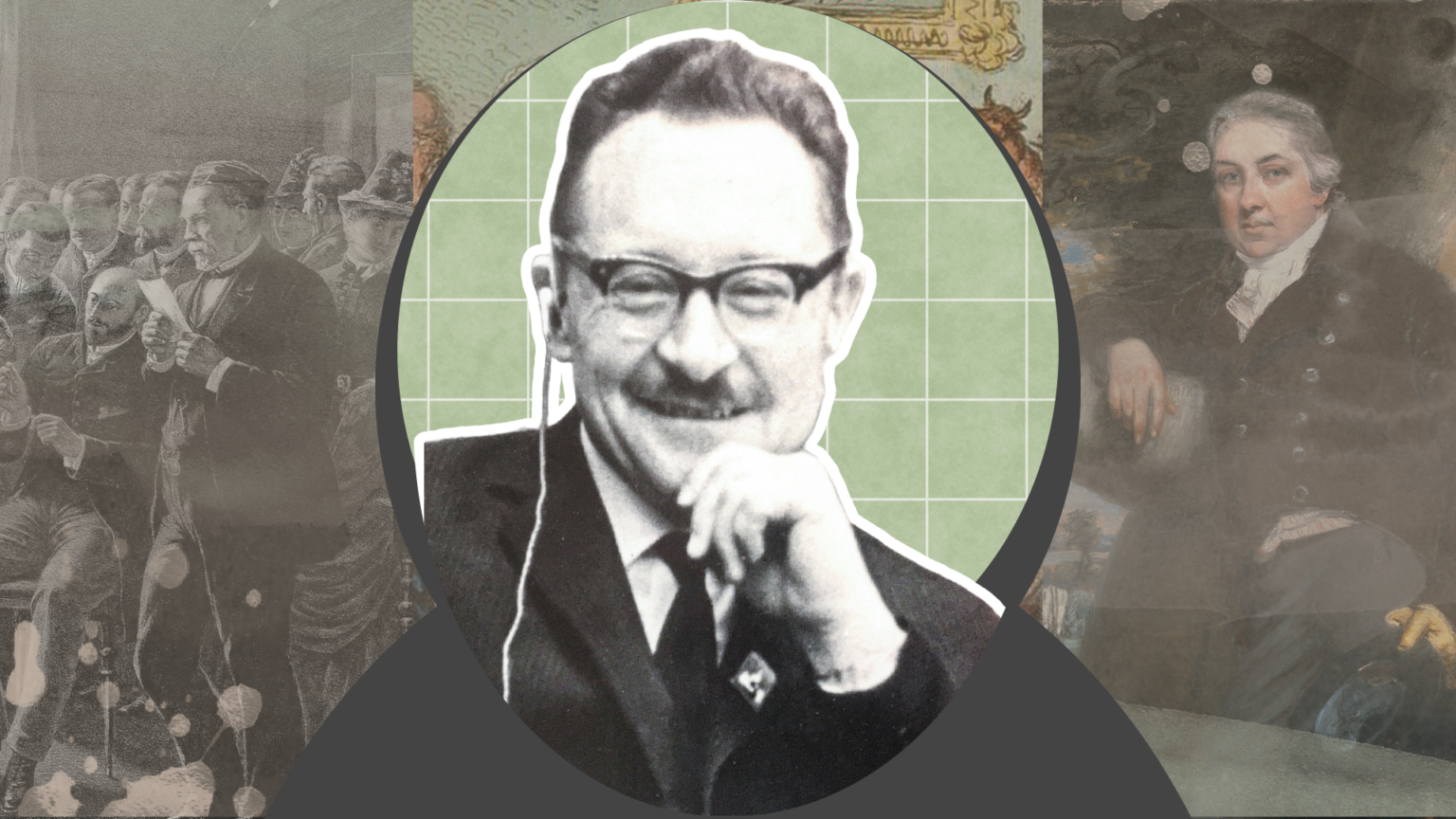
In 1958, Viktor Zhdanov, a Soviet virologist serving as the USSR’s Deputy Minister of Health, stood before the World Health Assembly (WHA) and proposed something that most thought was impossible: a coordinated global campaign to wipe smallpox off the planet entirely. A similar proposal had been rejected just a few years earlier for being too unrealistic.
You might think, well… the smallpox vaccine was developed by Edward Jenner in 1796, so the problem had been solved almost 160 years ago. Why the need for a campaign? But the gap between having a cure and getting it into the arm of every last person on earth is the difference between having a candle and lighting a city.
Zhdanov was the person who closed the gap.
He argued the variola virus would be uniquely possible to eradicate because humans were its only host, unlike mosquito-borne infections such as malaria. And a new preservation technique called lyophilisation could keep vaccine stocks stable during transport to remote, resource-poor regions.
Also Read: Surrounded by Food, Soviet Scientists Chose to Starve
By the power of his speech and his offer of 25 million doses of smallpox vaccine and logistical support to poorer countries on behalf of the Soviet Union, the assembly voted unanimously for the campaign.
What made Zhdanov’s efforts truly worth noting was that he managed to get the Soviet Union and America working together at the height of the Cold War. At a time when the two superpowers could barely agree on anything, his belief in international cooperation led him to build working relationships with American scientists, running joint research programs across the Iron Curtain.
"wait, that's real?"
The campaign launched in 1959 and intensified in 1967. For more than two decades, international teams worked through brutal conditions across Africa, Asia, and South America. Finally, on May 8, 1980, the 33rd World Health Assembly officially declared “The world and all its peoples have won freedom from smallpox.”
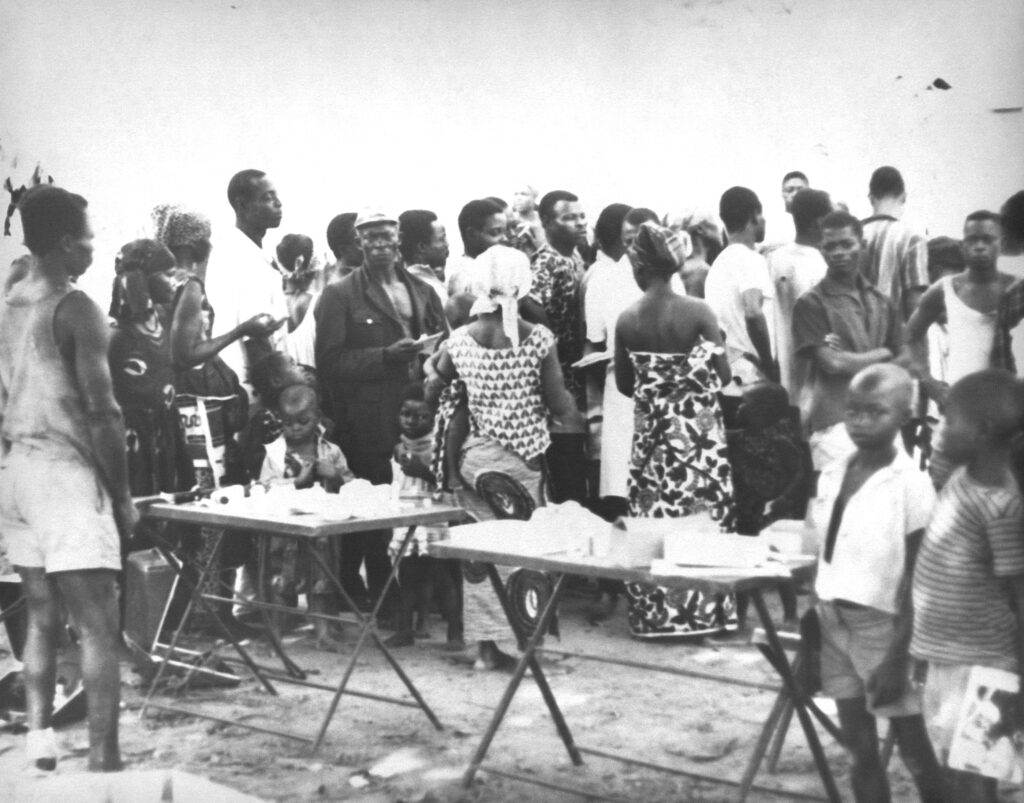
According to UNICEF and WHO, the eradication has since saved 200 million lives and saves $1 billion every single year. Numbers like that have led some scholars, including philosopher William MacAskill, to argue Zhdanov has done “more good for humanity” than any other person in history.
Also Read: The Scientist Who Faked Madness for 10 Years
But almost nobody knows Viktor Zhdanov today. I didn’t. Maybe you didn’t either. Not most people who benefited from his work.
Zhdanov died in 1987, after suffering a stroke upon receiving a letter informing him he was under investigation for anonymous allegations of plagiarism and nepotism. The person who sent those allegations was never identified.
I don’t think I need to tell you why he earns a place in our Science Heroes list.
And if you made it here, you’re the kind of person who’d like what we send on Sundays — stories like this, every week, straight to your inbox. Join our newsletter.
Sources: Wikipedia, Boing Boing, Work in Progress Magazine, WHO